Pre-IPO Investing Checklist: 10 Things to Verify Before You Invest
Introduction
Pre IPO investing has become an increasingly popular way for investors to gain early access to high-growth companies before they are listed on a stock exchange. While the opportunity for attractive returns exists, investing without proper research can increase your risk. Before you invest in pre IPO shares or purchase unlisted shares, it's essential to evaluate the company's financial health, business model, and future growth potential. This checklist will help you make informed investment decisions and build a stronger long-term portfolio.
Start your pre-IPO investment journey with trusted experts
What is Pre-IPO Investing?
Investing in private companies before they become publicly listed allows investors to participate in a company's growth at an early stage. Understanding how this investment works is the first step toward making smarter decisions.
1. Understanding Pre IPO Investing
Pre IPO investing involves purchasing shares of a private company before it launches its Initial Public Offering (IPO).
Key characteristics include:
Investment before public listing
Ownership in a private company
Long-term investment opportunity
Potential for capital appreciation
Limited liquidity before listing
Unlike listed stocks, pre IPO investing usually requires careful due diligence because public information may be limited.
2. What Are Unlisted Shares?
Unlisted shares are equity shares of companies that are not traded on a recognized stock exchange.
These shares are generally available through:
Existing shareholders
Employee stock ownership plans (ESOPs)
Venture capital investors
Private equity investors
Specialized investment platforms
Many investors choose to invest in pre IPO shares because they believe these companies have strong long-term growth potential.
3. Why Investors Choose Pre-IPO Companies
Many investors explore pre IPO investing to participate in the growth of promising businesses before they become publicly listed.
Some benefits include:
Early investment opportunity
Potential long-term wealth creation
Portfolio diversification
Exposure to innovative businesses
Opportunity to purchase unlisted shares before public demand increases
Should You Pause Your SIP During a Market Crash?
Why Verification Is Important Before Investing
Investing in private companies requires more research than investing in publicly listed companies. A structured verification process helps reduce risk and improves investment decisions.
1. Reduces Investment Risk
Carefully reviewing company information helps identify potential risks before investing.
This includes evaluating:
Business fundamentals
Financial performance
Industry outlook
Leadership quality
2. Helps Identify Strong Companies
Companies with healthy financials and sustainable business models are generally better positioned for future growth.
Proper research improves your confidence before you invest in pre IPO shares.
3. Avoids Overpriced Investments
Even an excellent company may become a poor investment if purchased at an unrealistic valuation.
Understanding valuation helps investors make better investment decisions.
4. Supports Better Decision-Making
Verification reduces emotional investing and encourages decisions based on facts instead of market speculation.
SIP vs One-Time Investment: Which Creates More Wealth?
Pre-IPO Investing Checklist: 10 Things to Verify Before You Invest
Every investment deserves careful evaluation. Before making a pre IPO investing decision, review these ten important factors.
1. Verify the Company's Business Model
Start by understanding how the company earns revenue and whether its business model is sustainable.
Check:
Products and services
Revenue sources
Customer demand
Scalability
Competitive advantage
A strong business model increases the long-term potential of unlisted shares.
2. Check Financial Performance
Financial strength is one of the most important indicators of business quality.
Review:
Revenue growth
Profitability
Cash flow
Debt levels
Operating margins
Companies with consistent financial performance are often stronger candidates for pre IPO investing.
3. Evaluate the Management Team
Experienced leadership plays a significant role in business success.
Research:
Founders' background
Executive experience
Industry expertise
Corporate governance
Leadership track record
A capable management team improves confidence before you invest in pre IPO shares.
4. Study the Industry Potential
A growing industry often creates better investment opportunities.
Consider:
Market size
Industry growth
Customer demand
Future expansion
Competitive landscape
Businesses operating in expanding industries often provide attractive long-term opportunities.
5. Analyze the Company Valuation
Always determine whether the company's valuation appears reasonable.
Evaluate:
Share pricing
Revenue multiples
Industry comparisons
Future growth expectations
Paying a fair price improves the long-term return potential of unlisted shares.
6. Review the IPO Readiness
A company preparing for public listing should demonstrate operational and regulatory maturity.
Look for:
IPO plans
Business expansion
Financial reporting
Regulatory compliance
Corporate governance
Companies with a clear IPO roadmap often become stronger pre IPO investing opportunities.
7. Understand the Risks
Every investment carries risk.
Before investing, understand:
Liquidity risk
Business risk
Market risk
Valuation risk
Regulatory risk
A balanced understanding of risks helps investors make informed decisions.
8. Verify Share Ownership and Documentation
Always verify the legal ownership of the shares.
Check:
Share certificates
Legal agreements
Transaction records
Ownership documents
Regulatory compliance
Proper documentation protects your investment.
9. Review Exit Opportunities
Understand how and when you may be able to sell your investment.
Review:
Expected IPO timeline
Buyback options
Secondary market opportunities
Long-term holding period
Knowing your exit options is an important part of pre IPO investing.
10. Diversify Your Portfolio
Avoid investing too much money in a single company.
Instead:
Invest across multiple companies.
Diversify across industries.
Balance your investment portfolio.
Focus on long-term wealth creation.
Diversification helps reduce the overall risk associated with unlisted shares.
How Much Should You Invest in Mutual Funds Every Month?
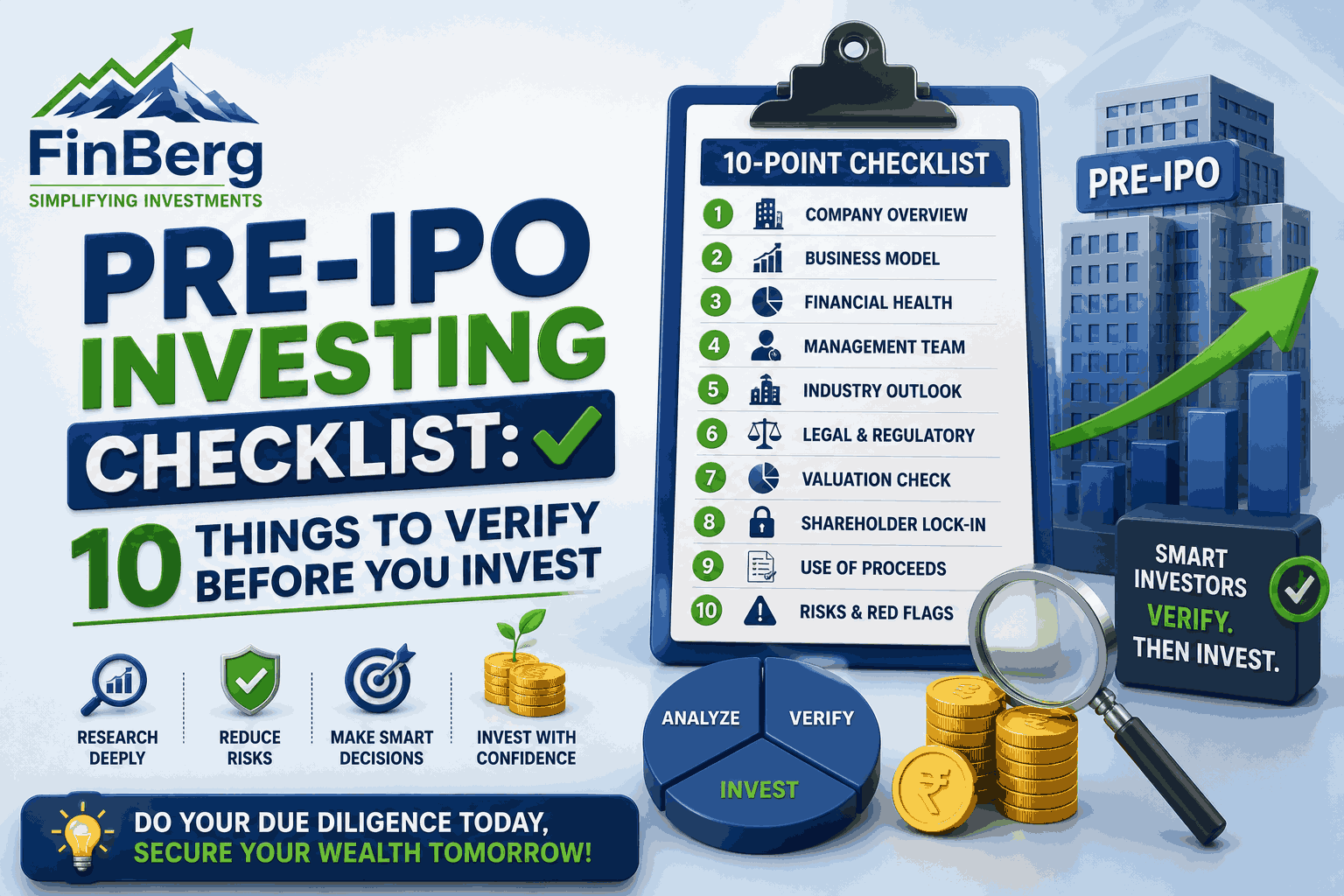
Pre-IPO Investing Checklist at a Glance
Before making any investment decision, it's important to evaluate every aspect of a private company. This checklist summarizes the key factors every investor should review before starting pre IPO investing.
Top Equity Investment Strategies Used by Professional Investors
Common Mistakes to Avoid
Even experienced investors can make mistakes when evaluating private companies. Avoiding these common errors can improve your chances of making successful pre IPO investing decisions.
1. Investing Without Research
Never rely solely on recommendations or market discussions.
Before you invest in pre IPO shares, always study:
Business model
Financial statements
Industry outlook
Company valuation
2. Ignoring Financial Statements
Financial reports provide valuable insight into a company's performance.
Always review:
Revenue growth
Profit margins
Cash flow
Debt levels
Strong financial health often indicates stronger long-term potential.
3. Buying Based on Market Hype
Popular companies may receive significant media attention, but popularity alone should never determine your investment decision.
Instead, focus on:
Business fundamentals
Management quality
Growth strategy
Financial performance
4. Overlooking Company Valuation
Even a high-growth company can become a poor investment if purchased at an excessive valuation.
Compare:
Revenue multiples
Industry peers
Future growth expectations
before investing in unlisted shares.
5. Investing Too Much in One Company
Concentrating your investment in a single company increases portfolio risk.
Diversification helps balance uncertainty while improving long-term stability.
6. Ignoring Exit Planning
Before making a pre IPO investing decision, understand how you may eventually sell your shares.
Review:
IPO timeline
Buyback opportunities
Secondary market options
Expected holding period
Best Mutual Fund Portfolio Allocation by Age: 20s, 30s, 40s & 50s
Tips for Successful Pre-IPO Investing
Successful investing requires patience, discipline, and careful research. Following these practical tips can help improve your investment decisions.
1. Think Long Term
Most private companies require several years before reaching a public listing.
Patience often leads to better investment outcomes.
2. Conduct Thorough Due Diligence
Before purchasing shares, evaluate:
Financial performance
Business model
Industry growth
Management team
Competitive advantage
Comprehensive research reduces unnecessary investment risk.
3. Invest Only What You Can Hold
Private company investments usually have limited liquidity.
Invest only the amount you can comfortably keep invested for several years.
4. Diversify Across Companies
Instead of investing everything in one business, spread your investments across:
Different industries
Multiple companies
Various growth stages
Diversification strengthens your investment portfolio.
5. Stay Updated on Company Progress
Monitor important developments such as:
Revenue growth
Business expansion
Leadership changes
Regulatory updates
IPO announcements
Regular updates help you make informed investment decisions.
6. Consult Investment Professionals
Professional guidance can help you:
Evaluate company valuation
Assess investment risks
Build a diversified portfolio
Identify suitable investment opportunities
How to Invest in Unlisted Shares: A Complete Guide for Investors
Conclusion
Successful pre IPO investing is built on careful research, patience, and disciplined decision-making. Before you invest in pre IPO shares, take the time to evaluate the company's business model, financial performance, management team, valuation, and growth potential. A structured approach helps reduce risk while improving your chances of identifying quality unlisted shares with long-term wealth creation potential.
Explore carefully researched pre-IPO opportunities with Finberg and invest with confidence. Our expert guidance helps you identify quality private companies and build a stronger long-term investment portfolio.
FAQs
Why is researching a company important before investing?
Research helps you understand the company's financial health, business model, growth potential, and overall investment risk.
What financial factors should I review before making an investment?
Focus on revenue growth, profitability, cash flow, debt levels, and overall financial stability.
Why is diversification important?
Diversification reduces portfolio risk by spreading investments across different companies and industries.
How long should I plan to hold private company investments?
Most investors should be prepared for a long-term holding period, as private companies may take several years to become publicly listed.
What documents should I verify before purchasing shares?
Always verify ownership records, share certificates, transaction documents, and other legal paperwork before completing an investment.
When should I seek professional investment advice?
If you're unsure about company valuation, investment risks, or portfolio allocation, consulting an experienced investment professional can help you make more informed decisions.
Powered by Froala Editor