How to Find High-Growth Pre-IPO Investment Opportunities
Introduction
Investing in companies before they go public has become an attractive strategy for investors seeking long-term wealth creation. A well-planned pre IPO investment offers the opportunity to participate in a company's growth before its shares are listed on a stock exchange. However, not every private company becomes a successful public business.
Identifying quality pre IPO shares requires careful research, financial analysis, and an understanding of the company's future potential. This guide explains how to identify promising pre IPO opportunities and make informed investment decisions.
Explore exclusive pre-IPO investment opportunities with our experts
What is Pre-IPO Investment?
Investing before a company launches its Initial Public Offering (IPO) allows investors to purchase ownership in a private company. Understanding how this process works is essential before exploring high-growth opportunities.
1. Understanding Pre IPO Investment
A pre IPO investment refers to purchasing shares of a private company before it becomes publicly listed on a stock exchange.
Key features include:
Investment before IPO
Ownership in a private company
Long-term investment approach
Potential for capital appreciation
Limited market availability
Unlike listed stocks, a pre IPO investment is generally available through private placements, employee stock programs, or specialized investment platforms.
2. What Are Pre IPO Shares?
Pre IPO shares are shares of privately held companies that are offered before their public listing.
These shares may become available through:
Existing shareholders
Early investors
Venture capital firms
Employee stock ownership plans (ESOPs)
Private investment platforms
Purchasing pre IPO shares gives investors an opportunity to participate in a company's growth before its public market debut.
3. Why Investors Consider Pre IPO Opportunities
Many investors are attracted to pre IPO opportunities because they offer access to businesses during their early growth stages.
Some potential advantages include:
Early entry into promising companies
Opportunity for long-term capital appreciation
Portfolio diversification
Exposure to innovative industries
Participation in future IPO growth
While these benefits are appealing, every pre IPO investment should be supported by thorough research and realistic expectations.
SIP vs One-Time Investment: Which Creates More Wealth?
Why High-Growth Pre-IPO Companies Attract Investors
Not every private company becomes a successful public company. High-growth businesses often share several characteristics that make them attractive to long-term investors.
1. Strong Business Model
Successful companies usually solve real customer problems while generating sustainable revenue.
Look for businesses that demonstrate:
Clear value proposition
Scalable operations
Strong customer demand
Consistent business growth
A strong business model is often the foundation of successful pre IPO opportunities.
2. Consistent Revenue Growth
Revenue growth is one of the most important indicators of business performance.
Evaluate:
Annual revenue growth
Customer acquisition
Sales consistency
Profit margins
Companies showing steady financial improvement may offer stronger pre IPO investment potential.
3. Large Market Opportunity
Businesses operating in expanding industries often have greater long-term growth potential.
Consider:
Industry size
Market demand
Future growth forecasts
Customer adoption trends
Growing industries often create better opportunities for investors purchasing pre IPO shares.
4. Experienced Leadership Team
A capable management team significantly influences a company's long-term success.
Review:
Founder experience
Executive leadership
Industry expertise
Corporate governance
Strong leadership often improves investor confidence.
5. Competitive Advantage
Successful companies usually possess strengths that distinguish them from competitors.
Examples include:
Proprietary technology
Strong brand recognition
Loyal customer base
Cost advantages
Unique products or services
Companies with sustainable competitive advantages often create attractive pre IPO opportunities.
6. Clear Path Toward IPO
An established roadmap toward becoming a publicly listed company increases investment confidence.
Look for businesses that demonstrate:
Business maturity
Regulatory preparedness
Expansion plans
IPO readiness
Companies actively preparing for public listing often attract greater investor interest.
How Much Should You Invest in Mutual Funds Every Month?
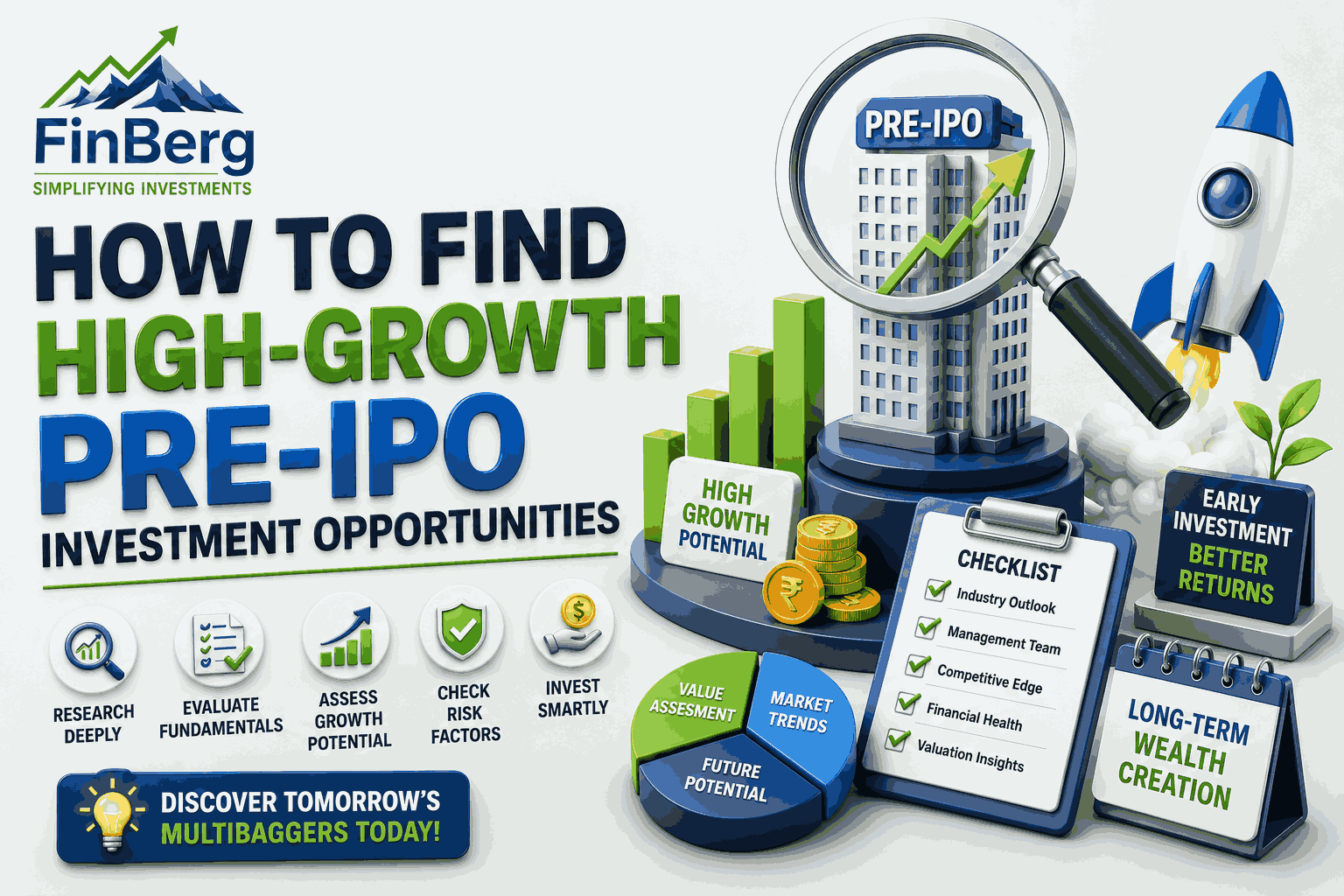
How to Find High-Growth Pre-IPO Investment Opportunities
Finding quality investment opportunities requires more than following market buzz. A systematic research process helps identify businesses with genuine long-term potential.
1. Research the Company's Financial Performance
Begin by evaluating the company's financial health.
Review:
Revenue growth
Profitability
Cash flow
Operating margins
Debt levels
Strong financial performance supports a more confident pre IPO investment decision.
2. Evaluate the Industry Potential
A company's success is closely linked to the industry it operates in.
Consider:
Industry growth rate
Market size
Future demand
Competitive landscape
Innovation trends
High-growth sectors often provide stronger pre IPO opportunities.
3. Study the Management Team
Leadership quality often determines whether a company can successfully execute its long-term vision.
Evaluate:
Founders' track record
Executive experience
Decision-making history
Industry expertise
Experienced leadership adds credibility to any pre IPO investment.
4. Understand the Company's Competitive Position
Analyze how the company compares with its competitors.
Review:
Product differentiation
Customer satisfaction
Brand reputation
Market share
Business scalability
A strong competitive position improves long-term growth prospects.
5. Analyze the Company's Valuation
Before purchasing pre IPO shares, determine whether the valuation appears reasonable.
Compare:
Revenue multiples
Industry peers
Future growth expectations
Financial performance
Paying a fair valuation improves potential investment returns.
6. Review IPO Readiness
Not every private company eventually becomes publicly listed.
Review factors such as:
Financial reporting quality
Regulatory compliance
Business expansion
Listing plans
Corporate governance
Companies with a well-defined IPO strategy may offer stronger long-term investment potential.
Top Equity Investment Strategies Used by Professional Investors
Key Risks of Pre-IPO Investment
While a pre IPO investment can offer attractive long-term growth potential, it also comes with risks that investors should understand before making any investment decision. Careful research and realistic expectations are essential when evaluating pre IPO opportunities.
1. Limited Liquidity
Unlike publicly traded stocks, pre IPO shares cannot usually be bought or sold easily.
This means:
Selling your investment may take time.
There may be limited buyers.
Your money could remain invested until the company goes public or another liquidity event occurs.
2. Valuation Risk
Determining the fair value of a private company can be challenging.
Investors should carefully evaluate:
Company financials
Revenue growth
Industry comparisons
Business potential
Paying too much for pre IPO shares may reduce future returns.
3. Delayed IPO Timeline
Not every private company reaches the stock market within the expected timeframe.
Possible reasons include:
Market conditions
Regulatory requirements
Business restructuring
Economic uncertainty
A delayed listing may extend your investment horizon.
4. Business Performance Risk
Even promising companies can experience unexpected challenges.
These may include:
Slower revenue growth
Increased competition
Operational issues
Economic downturns
Every pre IPO investment should be viewed as a long-term opportunity rather than a guaranteed success.
5. Regulatory Changes
Changes in government policies or financial regulations can influence private companies and their future listing plans.
Investors should stay informed about relevant regulatory developments.
6. Limited Public Information
Private companies generally disclose less information than publicly listed businesses.
Before investing, review available documents such as:
Financial statements
Company presentations
Business plans
Management information
Gathering reliable information is an important part of evaluating pre IPO opportunities.
Best Mutual Fund Portfolio Allocation by Age: 20s, 30s, 40s & 50s
Tips for Choosing the Right Pre-IPO Opportunities
Finding quality investment opportunities requires patience, research, and a disciplined approach.
1. Diversify Your Investments
Avoid concentrating all your capital in a single company.
Diversification across multiple businesses and industries helps reduce overall investment risk.
2. Invest for the Long Term
A pre IPO investment often requires patience.
Companies may take several years to become publicly listed, making a long-term investment mindset essential.
3. Conduct Thorough Due Diligence
Before purchasing pre IPO shares, carefully examine:
Financial performance
Business model
Industry outlook
Management team
Future expansion plans
Well-informed research improves investment decisions.
4. Understand the Company's Growth Strategy
Look for companies with clear expansion plans, sustainable revenue growth, and realistic business objectives.
Businesses with scalable models often provide stronger pre IPO opportunities.
5. Avoid Investing Based on Hype
Do not rely solely on media coverage or market rumors.
Always verify:
Financial data
Business fundamentals
Competitive position
Company valuation
Sound research should always guide your investment decisions.
6. Consult an Investment Expert
Professional guidance can help you evaluate:
Company valuation
Portfolio allocation
Risk factors
Investment suitability
Expert advice may help you identify better pre IPO opportunities aligned with your financial goals.
How to Invest in Unlisted Shares: A Complete Guide for Investors
Common Mistakes Investors Should Avoid
Avoiding common mistakes can significantly improve your long-term investment experience.
1. Investing Without Research
Never invest solely based on recommendations or market buzz.
Understand the company's business, financial performance, and future prospects before investing.
2. Ignoring Business Fundamentals
Strong revenue growth, profitability, customer demand, and competitive advantage are more important than market speculation.
3. Overlooking Valuation
Even an excellent company may become a poor investment if purchased at an excessively high valuation.
Evaluate whether the price of pre IPO shares is justified by future growth potential.
4. Expecting Quick Returns
Private investments usually require patience.
Some companies may take years before becoming publicly listed, so investors should avoid unrealistic expectations.
5. Investing Too Much in One Company
Diversification remains one of the most effective ways to reduce investment risk.
Avoid allocating a large percentage of your portfolio to a single business.
6. Following Market Rumors
Investment decisions should be based on verified information rather than social media discussions or unconfirmed reports.
Thorough research always provides a stronger foundation for long-term investing.
The Secret to Successful Mutual Fund Investing: Choosing the Right Strategy
Conclusion
A successful pre IPO investment begins with careful research, patience, and disciplined decision-making. By evaluating business fundamentals, financial performance, management quality, and industry potential, investors can identify promising pre IPO shares with strong long-term growth prospects. While every investment carries risks, choosing high-quality pre IPO opportunities and maintaining a diversified portfolio can help build long-term wealth.
Looking to explore high-growth investment opportunities before companies go public? Finberg helps you identify carefully researched private market opportunities with expert insights, enabling you to build a diversified portfolio focused on long-term wealth creation.
FAQs
What is a pre-IPO investment?
It involves purchasing shares of a private company before it becomes publicly listed on a stock exchange.
Who can invest before a company goes public?
Depending on availability and regulations, eligible individual investors, institutional investors, and qualified buyers may be able to invest.
Are these investments risky?
Yes. They carry risks such as limited liquidity, uncertain valuations, delayed listings, and business performance challenges.
How long does it usually take for a company to become publicly listed?
The timeline varies. Some companies may go public within a few years, while others may delay or postpone their listing plans.
How can I evaluate a private company's growth potential?
Review its financial performance, business model, leadership team, market opportunity, and competitive advantage before making an investment decision.
Why is diversification important?
Diversification helps reduce overall portfolio risk by spreading investments across multiple companies and sectors.
Powered by Froala Editor