How to Buy Unlisted Shares in India: Complete Process Explained
Unlisted shares are gaining strong attention among investors who want to invest beyond the stock market and access companies before they go public. As more people look for early stage opportunities and portfolio diversification, many are exploring how to buy unlisted shares in india in a structured and informed way. These shares allow investors to participate in the growth journey of private companies that may later list on stock exchanges.
Unlike listed stocks, unlisted shares operate in a private market with different rules, risks, and processes. For anyone planning to buy unlisted shares in india, understanding pricing, documentation, taxation, and step by step execution is essential. This guide explains the complete process clearly, helping investors approach unlisted shares in india with confidence and a long term perspective.
Get expert guidance to buy unlisted shares in India with confidence and clarity
What Are Unlisted Shares in India
This section explains the meaning of unlisted shares and how they differ from listed equities traded on stock exchanges.
Unlisted shares in india are equity shares of companies that are not listed on recognized stock exchanges like NSE or BSE. These companies can include startups, private limited firms, subsidiaries of listed companies, or businesses planning an IPO in the future. Transactions involving unlisted shares happen privately rather than through open market trading.
Key characteristics of unlisted shares
• Not traded on public stock exchanges
• Bought and sold through private agreements
• Lower liquidity compared to listed stocks
• Pricing based on negotiation and demand
• Longer investment horizon in most cases
Understanding these basics is the first step for anyone planning to buy unlisted shares in india responsibly.
Types of Life Insurance Policies in India
Why Investors Prefer to Buy Unlisted Shares in India
This section explains the key reasons why investors are increasingly interested in unlisted shares.
Many investors prefer to buy unlisted shares in india because these investments offer early access to companies before they attract public market attention. Several well known listed companies delivered significant value to investors who held their unlisted shares before IPO.
Reasons investors choose unlisted shares
1 Opportunity to invest in companies before public listing
2 Potential valuation advantage compared to listed peers
3 Exposure to fast growing private businesses
4 Diversification beyond traditional stock market investments
While returns can be attractive, investors should approach unlisted shares in india with realistic expectations and proper research.
Risks Involved When You Buy Unlisted Shares in India
This section highlights the major risks associated with unlisted share investing.
Before deciding to buy unlisted shares in india, it is important to understand that these investments carry higher risk compared to listed stocks. The absence of an active market and limited disclosures increase uncertainty.
Key risks investors should understand
• Limited exit options due to low liquidity
• Difficulty in accurate price discovery
• Limited publicly available financial information
• Longer holding periods with uncertain timelines
Because of these risks, unlisted shares in india are best suited for investors with patience, surplus capital, and higher risk tolerance.
Unlisted Shares Investment Explained for First Time Investors
How Unlisted Shares in India Are Priced
This section explains how pricing works for unlisted shares without exchange based trading.
Unlisted shares in india do not have daily market prices. Instead, pricing depends on internal company performance and market demand among private investors.
Common pricing factors include
• Company revenue, profitability, and growth prospects
• Recent funding rounds and valuation benchmarks
• Industry trends and competitive positioning
• Demand and supply among buyers and sellers
Pricing factors
Understanding pricing dynamics helps investors make informed decisions when they buy unlisted shares in india.
Unlisted Shares Investment in India: How to Get Started Step by Step
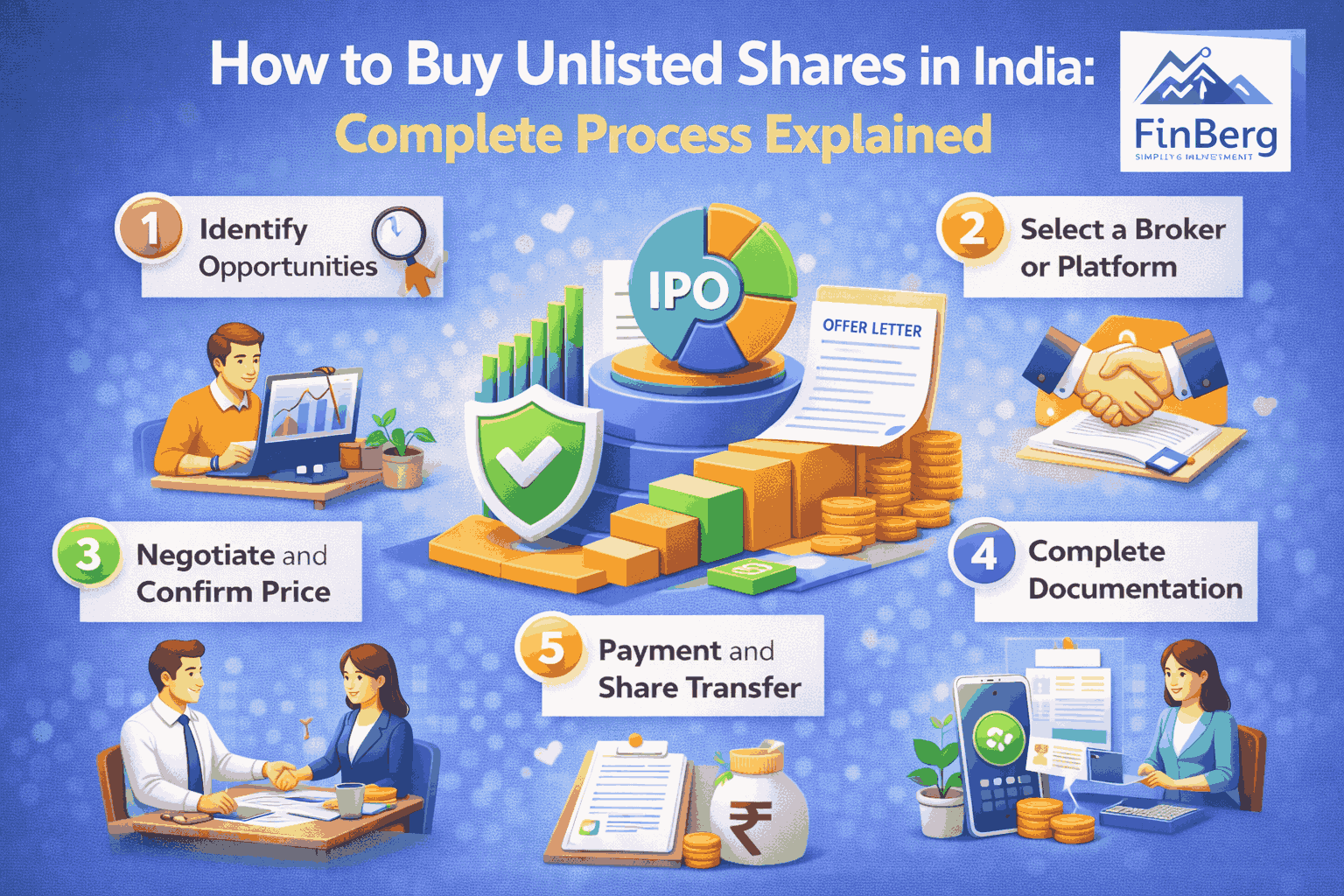
Step by Step Process to Buy Unlisted Shares in India
This section provides a clear step by step guide for executing unlisted share transactions.
Buying unlisted shares requires a disciplined approach to reduce risk and ensure compliance.
Identify the Right Unlisted Company
Choosing the right company is the most important step in unlisted investing.
Key aspects to evaluate
• Business model clarity and revenue sources
• Growth potential and industry outlook
• Quality and experience of management team
• Competitive advantages and long term vision
Strong fundamentals increase the probability of success when you buy unlisted shares in india.
Find a Reliable Seller or Platform
Transactions in unlisted shares typically occur through trusted intermediaries or private networks.
Common sources to buy unlisted shares in india
• Registered intermediaries dealing in private shares
• Private wealth and investment platforms
• Employees or early investors selling ESOP shares
Choosing a credible source reduces counterparty risk and ensures smoother transactions.
Conduct Proper Due Diligence
Due diligence is essential before committing funds.
Important checks include
• Company incorporation and compliance records
• Shareholding structure and ownership clarity
• Past transaction prices and trading history
• Any ongoing legal or financial issues
Thorough due diligence strengthens decision making for unlisted shares in india.
Categories of Portfolio Management in India: A Complete Classification Guide
Execute the Transaction
Execution involves documentation, payment, and transfer of shares.
Key steps involved
• Finalizing price and quantity with the seller
• Making payment through banking channels
• Submitting share transfer forms
• Credit of shares into demat account
Following the correct process ensures a smooth experience when you buy unlisted shares in india.
Documents and Accounts Required to Buy Unlisted Shares in India
This section outlines the essential documents and accounts required for unlisted share transactions.
Investors must have proper documentation ready before entering any transaction.
Key requirements include
• Active demat account to receive shares
• PAN card and completed KYC process
• Share transfer forms and agreements
• Bank account for payment and settlement
Having these in place simplifies the process to buy unlisted shares in india and avoids delays.
Categories of Mutual Funds in India: A Complete Classification Guide
Taxation on Unlisted Shares in India
This section explains how gains from unlisted shares are taxed.
Tax treatment depends on the holding period of the shares.
Capital gains classification
• Short term capital gains apply if shares are sold within the specified holding period
• Long term capital gains apply if shares are held beyond the required duration
Taxation
Understanding taxation is essential for planning returns from unlisted shares in india and making informed decisions.
Why Mutual Funds Are Popular in India: Benefits, Risks and Long Term Potential
Who Should Buy Unlisted Shares in India
This section explains the investor profile best suited for unlisted investments.
Unlisted shares are not suitable for all investors due to higher risk and lower liquidity.
Ideal investors include
• Individuals with long term investment horizons
• Investors with higher risk tolerance
• Those seeking portfolio diversification
• Investors with surplus capital
Such investors are better positioned to buy unlisted shares in india with a disciplined approach.
Have questions about buying unlisted shares in India? Contact us for expert support
Conclusion
Unlisted shares offer a unique opportunity to invest in companies before they enter public markets. While the potential returns can be attractive, investors must approach the process carefully, with proper research and patience.
By understanding the complete process, risks, pricing, and taxation, investors can confidently buy unlisted shares in india and make informed decisions. With a long term mindset, unlisted shares in india can become a valuable addition to a diversified investment portfolio.
FAQs on How to Buy Unlisted Shares in India
1. Is it legal to buy unlisted shares in India?
Yes, it is legal to buy unlisted shares in India through proper documentation and compliant private transactions.
2. How safe is it to buy unlisted shares in India?
Safety depends on company quality, due diligence, and risk tolerance. These investments generally carry higher risk than listed stocks.
3. What is the minimum investment required?
There is no fixed minimum investment amount. It depends on the company’s valuation and the seller’s requirements.
4. Can unlisted shares be sold easily?
Selling unlisted shares can be challenging due to limited liquidity and fewer buyers in the private market.
5. How are unlisted shares priced?
Pricing is based on company fundamentals, funding history, and market demand.
6. What happens to unlisted shares during an IPO?
Unlisted shares generally convert into listed shares after the IPO, allowing them to be traded on stock exchanges.
7. Do I need a demat account to buy unlisted shares in India?
Yes, a demat account is mandatory to hold, transfer, and manage unlisted shares.
8. Are unlisted shares regulated?
Yes, unlisted shares follow corporate and securities laws, but they are not traded on recognized stock exchanges.
9. How long should unlisted shares be held?
A long term holding period is usually recommended because exit opportunities may be limited and value appreciation takes time.
10. Are unlisted shares taxable in India?
Yes, gains from unlisted shares are subject to capital gains tax as per applicable tax regulations.
Powered by Froala Editor