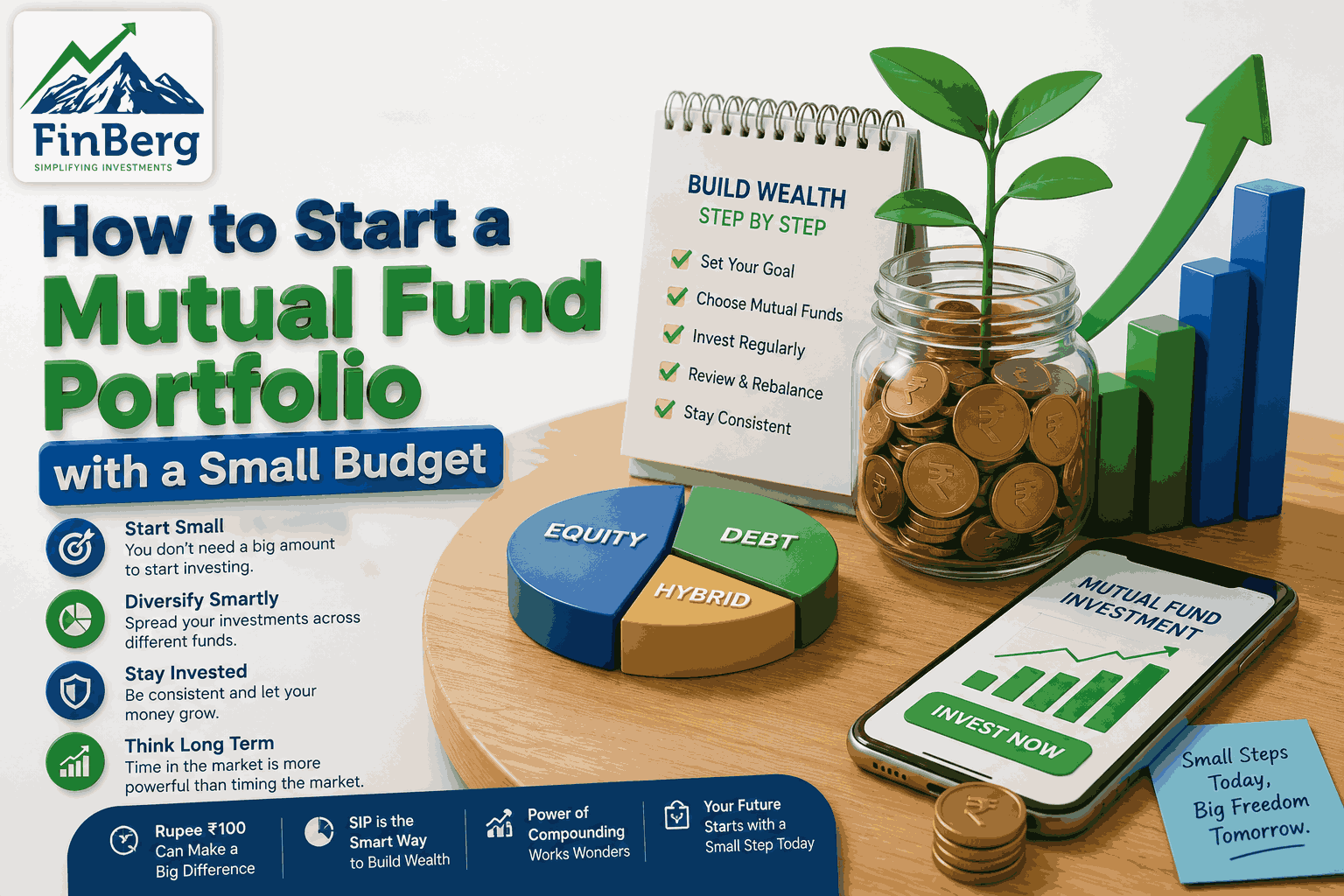
Top Mutual Fund Distributors in India: How to Compare Them

Where you choose to put your mutual fund money is a decision that can affect your investing experience for years to come. Most investors search for “top mutual fund distributors in India” and expect a list in descending order. But the more useful question is which distributor’s services actually match your financial objectives, risk appetite and investing style. This article explains the work of mutual fund distributors, what factors are worth comparing and how to evaluate them beyond brand popularity.
Get expert guidance for smarter mutual fund investment decisions
What Does a Mutual Fund Distributor Do?
An intermediary registered with AMFI (Association of Mutual Funds in India) and having an ARN (AMFI Registration Number) is called a mutual fund distributor. Distributors will be able to:
Help investors select mutual fund schemes based on stated objectives and risk profile
Account opening, KYC and transaction processing (purchases, redemptions, SIPs, Switches)
Ongoing services like statements, query resolution and portfolio consolidation
You get commissions (trail commission) from asset management companies (AMCs) by investing in “regular plans”
It is important to know the difference between a distributor and an investment adviser registered with SEBI (RIA). Distributors earn from regular plans and are supposed to check for suitability. SEBI-registered investment advisers charge a direct fee from the investor and have a fiduciary duty to act in the best interest of the client. Some entities operate under both models for different services, so it is helpful to ask what capacity a firm or person is working under before you invest.
Key Factors to Compare Mutual Fund Distributors
It’s not just one thing. Here’s a checklist of things to compare side-by-side.
1. Investment Support and Fund Selection Process
Does the distributor offer goal based planning (retirement, child’s education, home purchase) or just transaction facilitation?
Is fund selection based on your risk profile, time horizon and asset allocation needs or is it generic?
Do they explain why a fund is recommended, its category, mandate, and risks?
2. Quality of Service
Transaction, redemption, query resolution turnaround time
Availability of relationship support (phone, email, chat, face to face)
Communicating effectively during times of market volatility
3. Openness
Are all charges, exit loads and expense ratios applicable at the time of purchase?
Is the difference between direct and regular plans clearly explained?
Are statements and portfolio reports easy to review and readily available?
4. Commissions or Fees
Regular plans have a distributor commission embedded in them and hence have a (usually) higher expense ratio than direct plans
Some distributors also charge advisory or platform fees separately. Watch for this.
Compare the value of services (planning, support, consolidation) to the cost differential versus a direct plan, which has no distributor commission but also no personalized support
5. Accessibilité numérique
Access to app/web platform to monitor investments, SIPs and switches
E-mandates and paperless onboarding Digital KYC end-to-end
Consolidated views of the portfolio across different AMCs
6. Education and Investor Support
Does the distributor provide any educational materials, calculators or tools to help investors learn about mutual fund concepts?
Are there any guides for new investors on SIP, goal planning and taxations?
7. Regulatory Information
Verify that the distributor has a valid AMFI ARN
Please confirm if there is a transparent grievance redressal mechanism including escalation to AMFI or SEBI (through SCORES) if necessary.
Check if company is distributor, RIA or hybrid as they are paid and regulated differently
Comparison Checklist at a Glance
Once you’ve found a distributor, here’s a quick checklist to run through before making a final decision:
Fund Selection Advice that is goal based and risk appropriate or generic advice?
Support Availability & Speed of Support Service Quality
Transparency Are plans, fees and risks clearly defined?
Fees/Commission Is the service offered worth the price difference between the regular and direct plan?
Digital Access Is there an app/portal for tracking and transacting?
Investor Education Are there calculators, tools and explainers?
Regulatory Status: Is the ARN stand good? Is there a clear grievance process?
How to Create a Tax-Efficient Investment Strategy Without Compromising Your Financial Goals
Popularity vs. Suitability: Choosing the Right Fit
It is tempting to select a distributor simply because it is being heavily advertised, has a large customer base or is recommended by friends or relatives. But popularity does not equal propriety.
The distributor that suits the person with a high risk appetite and long-term investment horizon may not be the right one for the person who is prioritizing capital protection or is planning for a near-term goal. Similarly, a platform that’s optimized for high transaction volumes and self-directed investors might not be right for someone who wants detailed, ongoing guidance.
Rather than asking “which distributor is the best?”, ask yourself:
Is this distributor aware of my financial objectives and risk tolerance?
Does their selection of funds match my time horizon?
Is their fee/commission structure reasonable compared to what service I receive?
Is the digital support and access I actually need available?
This guide does not rank or recommend any distributor as the “best” in India. Readers should be wary of any sources that claim unverified rankings, AUM figures or return statistics as fact. All investments in mutual funds are subject to market risks and past performance is not indicative of future results. Always read scheme related documents carefully and consult a qualified financial professional, wherever required, before investing.
Mutual Fund Overlap: How to Check If You Own Too Many Similar Funds
How Finberg Can Help Investors Evaluate Their Options
You need to understand your own financial situation before you compare distributors or products to make an informed choice. This is where Finberg can help. Finberg is designed to help investors understand investment options, financial concepts and planning frameworks in plain language so decisions including who to invest through are made on clarity, not marketing claims.
Finberg allows investors to:
Get educational information explaining mutual fund structures, plan types (direct vs regular) and cost implications
Use planning tools and calculators to match investments with personal goals
Read and understand fund documents, expense ratios and risk indicators
Learn how to ask the right questions when evaluating any distributor or adviser
Finberg’s role is educational; it is meant to help you evaluate options and understand concepts, not to replace the due diligence you should do on any specific distributor, or the advice of a qualified, registered professional for your individual circumstances.
Pre-IPO Investing Checklist: 10 Things to Verify Before You Invest
Conclusion
Mutual fund distributors do play a part in helping investors access, select and manage their investments. But the right distributor for you is one whose services match your goals, risk profile and expectations of transparency and cost, not necessarily the most well-known name. The much better picture comes out when the distributors are compared on fund selection support, quality of service, transparency, fees, digital accessibility, investor education and regulatory standing and not just on popularity.
Building your own understanding is one of the best things you can do before deciding who to invest with, as mutual fund investments carry market risk and past performance is never a guarantee of future performance. Resources like Finberg can help you do this.
Frequently Asked Question
1. Mutual fund distributors are only allowed to sell ?
mutual fund products but financial advisers can advise on a wider range of financial products and services. AMFI registered distributor (ARN holder) who is eligible to receive commission from AMCs for bringing in investments in regular plans The SEBI-registered investment adviser (RIA) charges the client directly and has a fiduciary responsibility and does not earn product commissions.
2. Are direct plans always cheaper than regular plans?
Direct plans are cheaper than regular plans because there is no distributor commission. But is it worth the price paid? It all depends on what you care about the advice and service you get.
3.How to check if mutual fund distributor is genuine?
Verify the status of the distributor’s AMFI Registration Number (ARN) on the AMFI website to ensure that he/she is registered as an authorized distributor with the respective AMCs or platforms.
4. Do I need to invest in mutual funds through a distributor?
No. Investors can invest directly with AMCs with direct plans without a distributor. They typically have lower expense ratios but no personalized distribution support.
5. What can I do if I have a complaint against a distributor?
You can first go to the distributor and if you are not satisfied you can escalate the issue through AMFI or SEBI’s SCORES (SEBI Complaints Redress System) portal.
6. Does popularity improve the performance of a distributor's funds?
No. The performance of the underlying mutual fund schemes is not dependent on the size/popularity of the distributor but is subject to market risk and fund manager decisions and not the distributor .
7. Does a mutual fund distributor guarantee returns on mutual fund investments?
No. Mutual fund investments are subject to market risks and no distributor, advisor or platform can legally guarantee returns. If you get a guarantee claim like that, it should raise a red flag.
Powered by Froala Editor