
Equity vs Debt vs Hybrid Mutual Funds: Which One Should You Choose?
Introduction
Understanding equity versus debt versus mutual funds is important when choosing an investment strategy that matches your financial goals. Investors can choose from mutual fund categories based on their risk tolerance investment horizon, liquidity requirements and return expectations.
In this guide we compare equity versus debt versus mutual funds, explain the major types of mutual funds and discuss how to select an appropriate category, for different financial situations.
Explore mutual fund options tailored to your investment goals
What Are Mutual Fund Categories?
Mutual fund categories help investors see how different schemes put their money to work. The main mutual fund categories are equity-oriented funds, debt-oriented funds, hybrid funds, solution-oriented funds and other special categories.
Knowing these mutual fund categories helps people compare risk, investment goals and what is, in the portfolio.
The most talked about types of funds are equity funds, debt funds, hybrid funds, index funds, sectoral funds, thematic funds and other schemes that fit specific categories.
Equity vs Debt vs Hybrid Mutual Funds: Basic Understanding
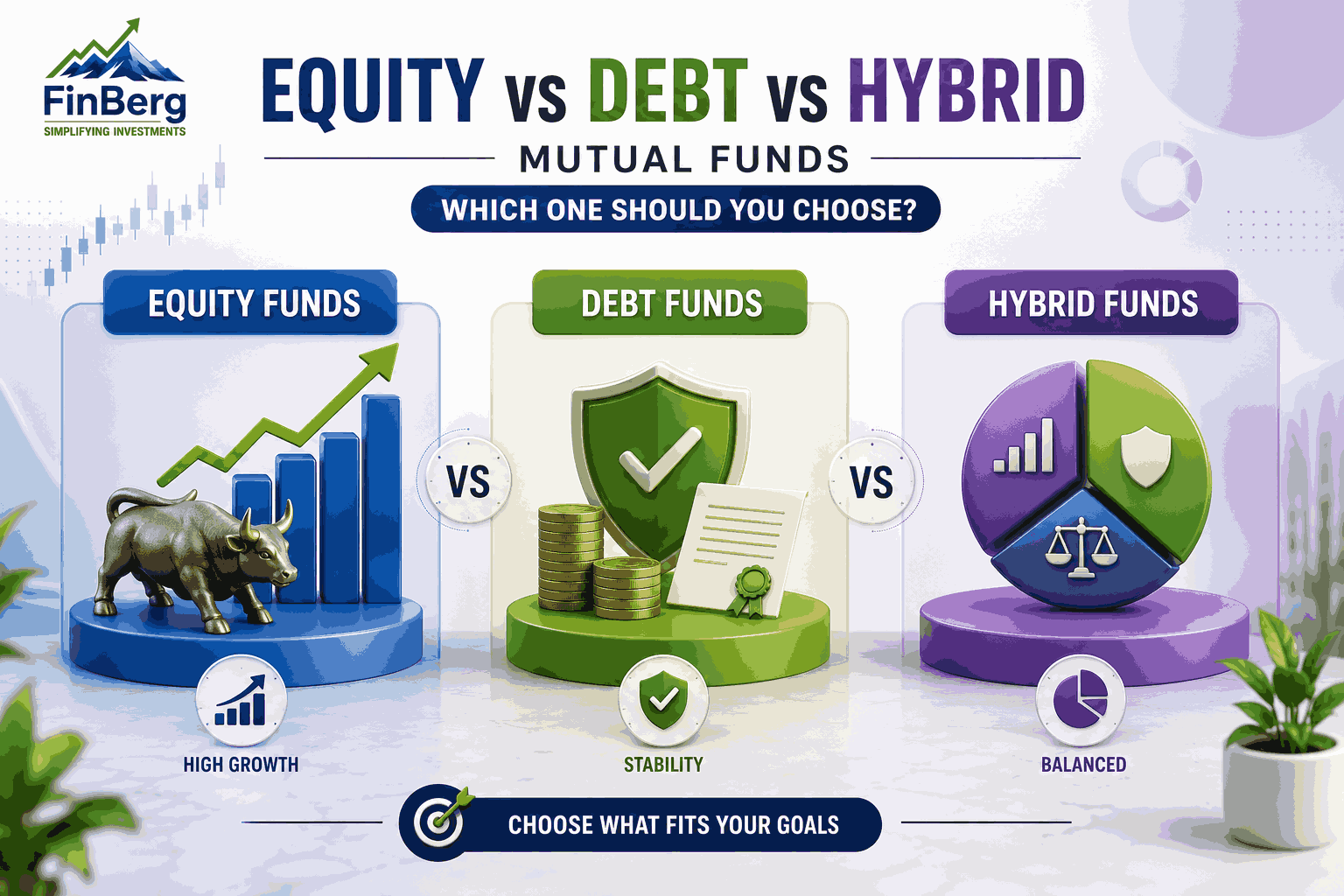
The main difference between equity funds and debt mutual funds and hybrid mutual funds is how they are invested in different types of assets.
Equity mutual funds mainly buy shares of companies. Debt mutual funds mainly buy fixed-income investments while hybrid mutual funds have a mix of equity and debt investments.
When looking at equity funds and debt mutual funds and hybrid mutual funds people should think about more, than just the returns they might get. Risk, how much the value changes how they plan to keep the money how easy it is to get the money back and what they want to achieve with their money are all just as important.
What Are Equity Mutual Funds?
Equity mutual funds primarily invest in stocks of companies. Because stock prices fluctuate, equity funds can experience significant short-term volatility.
They may be considered by investors who:
Have a long investment horizon
Can tolerate market fluctuations
Seek long-term growth potential
Have goals several years away
Common equity-oriented types of mutual funds include large-cap, mid-cap, small-cap, flexi-cap, and index-oriented funds.
Benefits of Equity Funds
Equity funds let investors gain exposure to companies at once. This happens through management. These funds can be helpful, for people who want their money to grow over time. They are often used by investors who are focused on long-term gains.
Risks of Equity Funds
Market movements can cause substantial short-term fluctuations. Returns are not guaranteed, and investors should understand their ability to tolerate losses before investing.
Mutual Fund Portfolio Review: How to Identify Overlap, Risk & Underperforming Investments
What Are Debt Mutual Funds?
Debt mutual funds mainly put money into fixed-income investments like government bonds, corporate bonds and money-market tools based on the funds category.
When choosing among types of mutual funds some investors prefer debt funds because they tend to have lower volatility than equity-focused funds.
However, debt funds are not completely risk-free.
Their performance can be affected by:
Interest rate movements
Credit quality
Duration
Liquidity conditions
Benefits of Debt Funds
Debt funds can provide diversification and may have a role in financial plans where stability and liquidity are important.
Risks of Debt Funds
Interest-rate risk, credit risk, and liquidity risk can affect debt fund investments. The level of risk differs across individual schemes.
What Are Hybrid Mutual Funds?
Hybrid mutual funds combine asset classes, usually equity and debt. The allocation depends on the scheme and its investment objective.
When comparing equity, debt and hybrid mutual funds mutual funds can offer a middle‑ground approach for investors who want exposure to both growth‑oriented and relatively stable assets.
Different hybrid mutual fund categories can have different levels of equity and debt exposure.
Benefits of Hybrid Funds
Exposure to multiple asset classes
Diversification within one scheme
Different options for different risk profiles
Convenient portfolio structure
Risks of Hybrid Funds
Hybrid funds are not automatically low-risk. A fund with substantial equity exposure can experience significant market volatility.
Equity vs Debt vs Hybrid Mutual Funds: Key Differences
The following comparison makes equity vs debt vs hybrid mutual funds easier to understand:
This comparison is only a general guide. Individual funds can have different characteristics.
How to Create a Tax-Efficient Investment Strategy Without Compromising Your Financial Goals
How to Choose Between Equity, Debt and Hybrid Funds
The right decision in equity vs debt vs hybrid mutual funds depends on your individual financial situation.
Before selecting from different mutual fund categories, consider the following factors.
1. Investment Horizon
Your investment horizon is one of the most important factors.
For long-term goals, equity-oriented investments may be considered depending on your risk tolerance.
For shorter-term goals, investors may give greater importance to stability and liquidity.
2. Risk Tolerance
Consider how comfortable you are with market fluctuations.
If a temporary decline in portfolio value would make you uncomfortable or cause you to sell emotionally, a highly equity-oriented strategy may not be appropriate.
3. Financial Goals
Your investment should have a clear purpose.
For example:
Retirement
Children's education
Home purchase
Wealth accumulation
Emergency requirements
Understanding your goal can help you narrow down suitable mutual fund categories.
4. Liquidity Requirements
Consider when you may need access to your money.
An investment designed for a long-term objective may not be suitable for funds you expect to need soon.
Mutual Fund Overlap: How to Check If You Own Too Many Similar Funds
Types of Mutual Funds to Consider
There are several types of mutual funds available to investors, each designed around different investment strategies.
Equity Funds
These invest primarily in equities and can include large-cap, mid-cap, small-cap, flexi-cap, and index-oriented schemes.
Debt Funds
These focus primarily on fixed-income securities, with different categories based on duration, credit quality, and investment strategy.
Hybrid Funds
These combine equity and debt in different proportions.
Index Funds
These generally aim to track a particular market index.
Sectoral and Thematic Funds
These focus on specific sectors or themes and can involve higher concentration risk.
Investors should understand the investment objective and risk characteristics before choosing among these types of mutual funds.
Which Option May Suit Different Investors?
The choice in equity vs debt vs hybrid mutual funds can differ significantly between investors.
Long-Term Growth Investor
An investor with a long time horizon and higher risk tolerance may consider equity-oriented mutual fund categories.
Moderate-Risk Investor
An investor looking for a combination of equity and debt exposure may consider an appropriate hybrid fund category.
Stability-Focused Investor
An investor with a shorter horizon may consider suitable debt-oriented options after evaluating risk and liquidity.
These are general examples and should not be treated as personalized investment recommendations.
Pre-IPO Investing Checklist: 10 Things to Verify Before You Invest
Can You Combine Different Mutual Fund Categories?
Yes. Investors do not necessarily have to choose only one category.
A portfolio can contain different types of mutual funds if they serve different purposes.
For example, an investor might use:
Equity funds for long-term growth
Debt funds for stability
Hybrid funds for diversified exposure
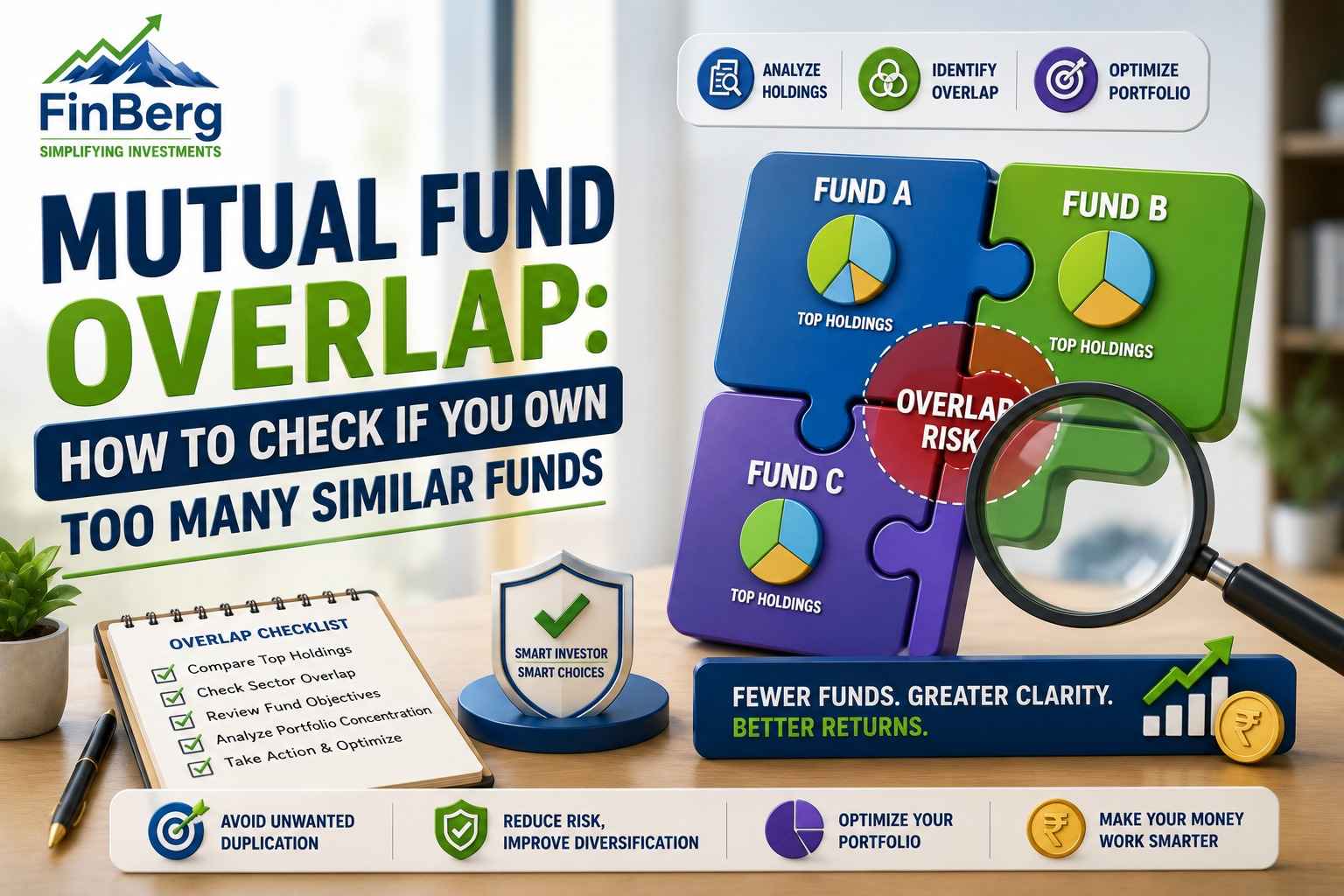
However, adding more funds does not automatically improve diversification. Investors should check whether different schemes overlap in holdings and investment strategy.
Equity vs Debt vs Hybrid Mutual Funds and Asset Allocation
Asset allocation should be considered alongside the choice between equity, debt, and hybrid investments.
For example:
Your actual allocation should depend on your financial goals, risk profile, existing assets, income, and investment horizon.
Common Mistakes to Avoid
Choosing Only Based on Past Returns
Past performance does not guarantee future returns.
Ignoring Risk
Investors should understand the volatility and risks associated with each investment.
Investing Without a Goal
Every investment should have a clear purpose within your financial plan.
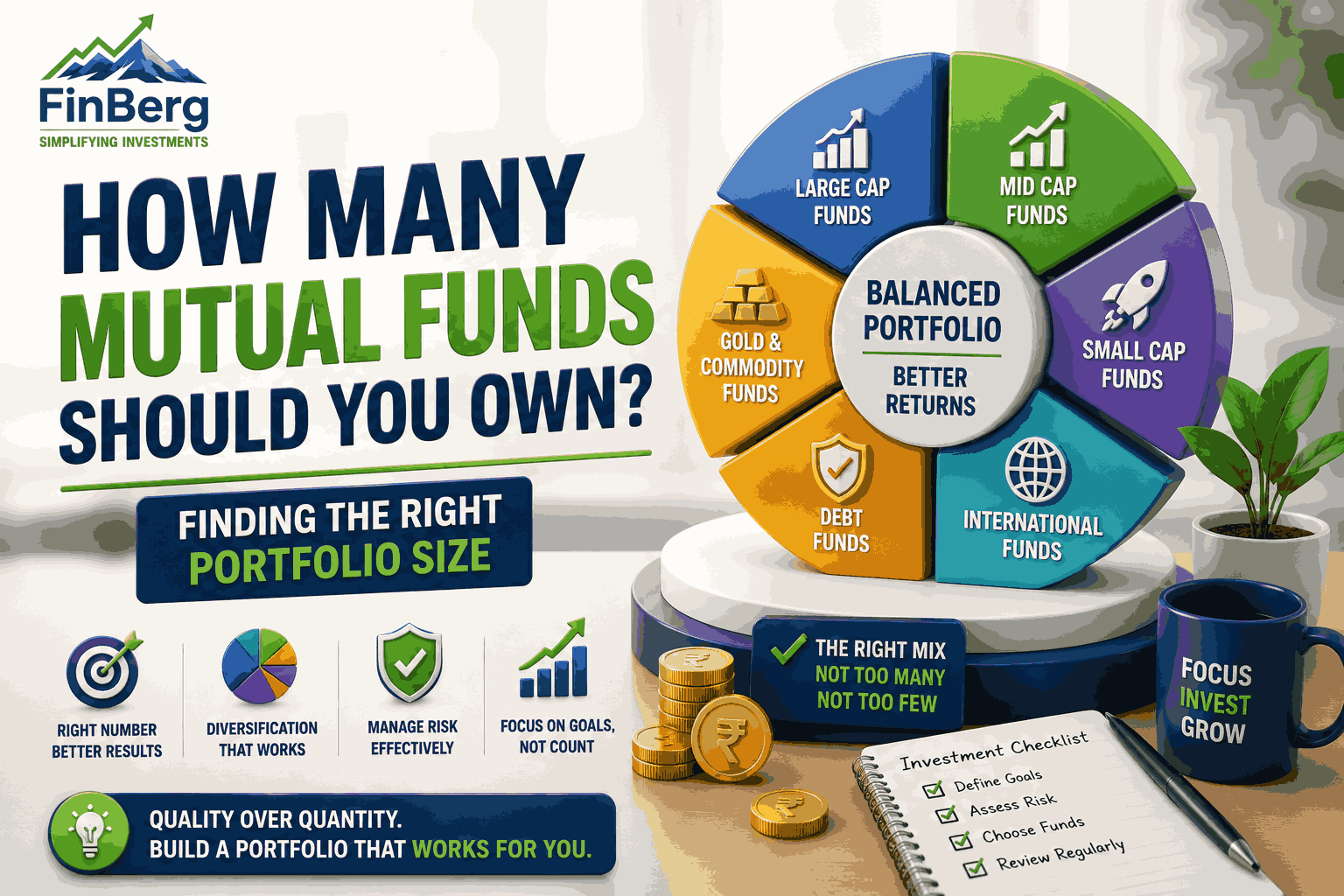
Holding Too Many Funds
Owning multiple schemes from similar mutual fund categories can create unnecessary duplication.
Ignoring Your Time Horizon
The investment suitable for a 15-year goal may not be appropriate for money needed in two years.
Should You Increase Your SIP Every Year? Step-Up SIP Explained
Why Understanding Types of Mutual Funds Matters
I think learning about the kinds of mutual funds can help investors avoid choosing investments just because they are popular or have recently performed well.
When you understand the investment goal, the mix of holdings the level of risk and the time horizon you can make informed decisions.
Before you invest take the time to compare the mutual fund categories and see how each one fits into your overall financial plan.
How to Calculate SIP Returns for Better Investment Planning
Final Thoughts on Equity vs Debt vs Hybrid Mutual Funds
There is no winner when comparing equity, debt and hybrid mutual funds.
Equity funds may suit investors who want long‑term growth and can handle volatility.
Debt funds may bring stability and diversification while hybrid funds mix asset classes in one plan.
The right choice depends on your goals, investment horizon, risk tolerance, liquidity needs and existing portfolio.
Plan Your Investments with Finberg
Make informed investment decisions with expert guidance tailored to your financial goals.
FAQs
1. Which is better for long-term investment?
Equity-oriented funds may be a choice for long-term goals if the investor can handle market ups and downs. The right option depends on each person’s situation.
2. Are debt funds risk-free?
No debt mutual funds are not completely safe. They can be influenced by changes in interest rates, credit risks, how easy it is to sell them and overall market conditions.
3. Are funds safer than equity funds?
Not always. The safety of a fund depends on how much it invests in equity versus debt. Some may still carry risk.
4. Can I invest in more than one mutual fund category?
Yes you can invest in categories. It makes sense when different funds help meet parts of your financial plan.
5. How should beginners choose a mutual fund category?
Beginners should think about their goal, how long they plan to invest, how much risk they feel comfortable with and how quickly they may need access to money.
6. Are all types of funds suitable for every investor?
No, not all mutual funds fit every investor. Each type has its level of risk, focus and investment style. It's important to check what fits your needs.
7. Should I choose a fund based on its returns?
No, past performance alone isn’t enough. You should also look at risk, consistency, over time the fund’s strategy, fees and whether it matches your goal.
Powered by Froala Editor
_11zon.jpeg)