Large Cap vs Mid Cap vs Small Cap: Where Are the Biggest Opportunities in 2026?
Introduction
Understanding the difference between large cap vs mid cap vs small cap is essential for investors looking to build a strong portfolio in 2026. Every company listed on the stock market is classified based on its market capitalization, and each category offers a unique balance of risk, stability, and growth potential.
Whether you're a new investor or looking to diversify your portfolio, knowing how market capitalization influences investment decisions can help you identify the biggest opportunities. This guide explains the key differences between large cap vs mid cap vs small cap companies and how each can contribute to long-term wealth creation.
Unlisted Shares Price List & Companies in India 2026
Understanding Market Capitalization
What Is Market Capitalization?
Market capitalization refers to the total market value of a company's outstanding shares. It is calculated by multiplying the company's current share price by the total number of outstanding shares. Investors use market capitalization to understand the size, stability, and growth potential of a business.
Companies are generally grouped into three categories based on market capitalization:
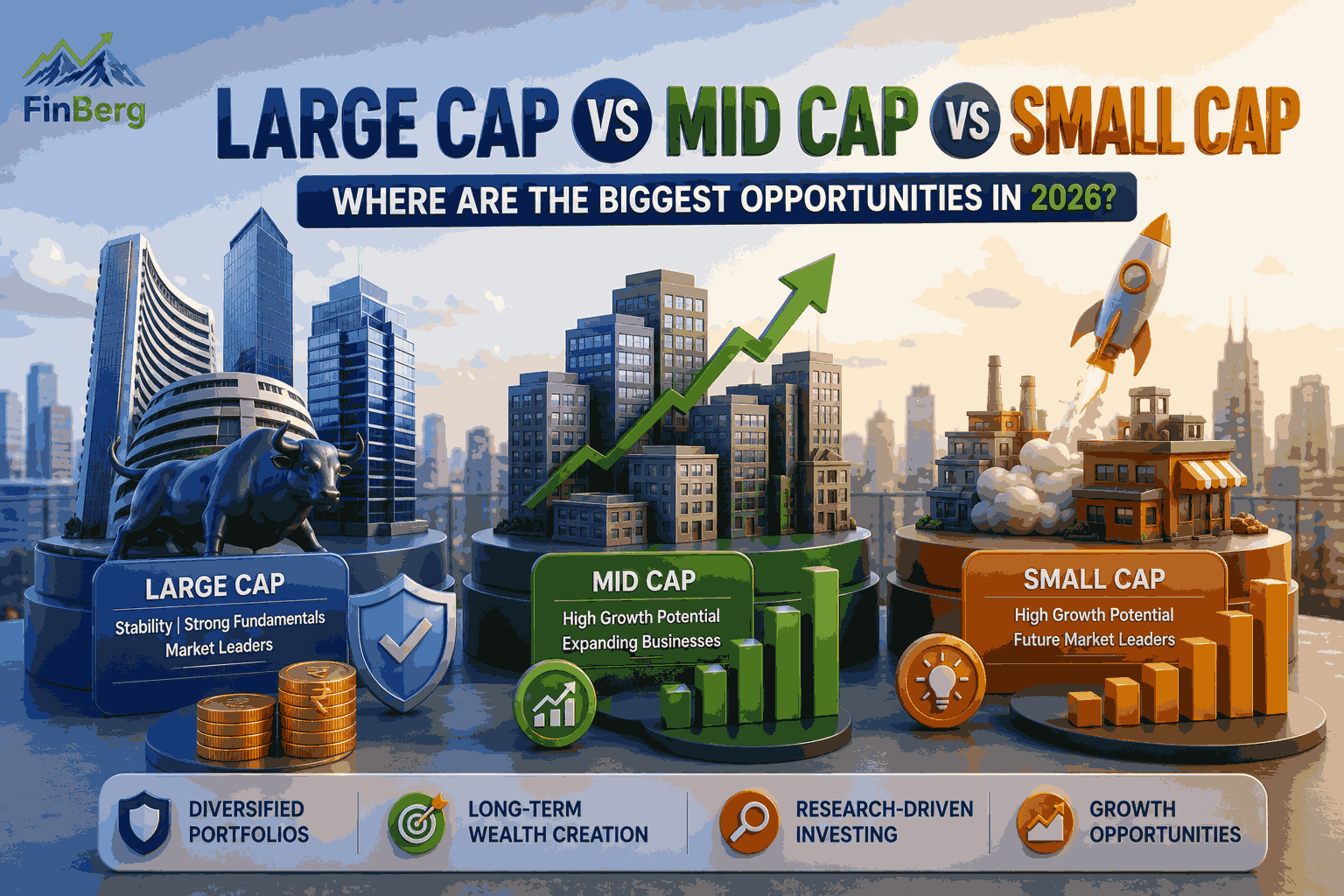
Large Cap
Mid Cap
Small Cap
Understanding market capitalization helps investors evaluate investment risk and choose companies that align with their financial goals.
How Companies Are Classified by Market Capitalization
Stock market regulators classify companies according to their market capitalization.
Large Cap Companies: Top 100 companies by market capitalization.
Mid Cap Companies: Companies ranked 101 to 250.
Small Cap Companies: Companies ranked 251 and below.
These classifications make comparing large cap vs mid cap vs small cap investments much easier.
Why Market Capitalization Matters
Market capitalization influences several important investment factors.
It helps investors evaluate:
Business stability
Growth opportunities
Risk level
Market leadership
Portfolio diversification
Understanding market capitalization allows investors to make informed decisions rather than investing based only on recent stock performance.
How High-Net-Worth Investors Use PMS to Beat Market Benchmarks
What Are Large Cap Companies?
Large cap companies are well-established businesses with strong financial performance and a proven track record. They often dominate their industries and are considered relatively stable investments.
Key Characteristics
Large cap companies generally offer:
Strong balance sheets
Consistent earnings
Industry leadership
High liquidity
Stable cash flows
When comparing large cap vs mid cap vs small cap companies, large caps are typically viewed as the safest category.
Advantages
Investing in large cap companies offers several benefits.
These include:
Lower market volatility
Stable long-term returns
Better resilience during economic uncertainty
Strong corporate governance
For investors who prioritize capital preservation, large cap companies remain an important part of a diversified portfolio.
Potential Limitations
While large cap companies provide stability, their growth rate is usually slower than smaller companies. Because these businesses are already well established, rapid expansion opportunities are relatively limited.
International Equity vs Indian Equity: Where Are the Better Equity Investment Opportunities in 2026?
What Are Mid Cap Companies?
Mid cap companies are businesses that have moved beyond the startup phase and are expanding rapidly. Many future market leaders begin as mid cap companies.
Key Characteristics
Mid cap companies often feature:
Rapid business growth
Expanding customer base
Increasing revenues
Strong future potential
This balance of stability and growth makes them attractive when comparing large cap vs mid cap vs small cap investments.
Advantages
Mid cap companies provide:
Higher growth potential
Better long-term return opportunities
Expanding market presence
Attractive valuation opportunities
Many investors include mid cap stocks to achieve a balance between risk and reward.
Potential Risks
Although mid cap companies offer higher growth, they are more sensitive to changing market conditions than large cap companies. Share prices may fluctuate more during periods of economic uncertainty.
What Are Small Cap Companies?
Small cap companies are emerging businesses with relatively smaller market capitalization. These companies often operate in growing industries and may become future market leaders.
Key Characteristics
Small cap companies generally have:
High growth potential
Innovative business models
Rapid expansion opportunities
Greater earnings variability
For investors evaluating large cap vs mid cap vs small cap, small cap companies usually offer the highest long-term return potential.
Advantages
Small cap companies may provide:
Significant capital appreciation
Early-stage investment opportunities
Higher growth potential
Long-term wealth creation
Investors with a long investment horizon often allocate a portion of their portfolio to small cap companies.
Potential Risks
Small cap companies also carry higher investment risk.
Common challenges include:
Greater market volatility
Lower liquidity
Higher business uncertainty
Increased sensitivity to economic changes
Investors should understand these risks before investing in small cap companies.
Top Pre-IPO Companies in India That Investors Are Watching Closely
Large Cap vs Mid Cap vs Small Cap: Key Differences
The choice between large cap vs mid cap vs small cap depends on your investment goals, risk tolerance, and time horizon.
Large Cap vs Mid Cap vs Small Cap: Which Is Right for You?
There is no one-size-fits-all answer when choosing between large cap vs mid cap vs small cap investments.
Conservative Investors
Large cap companies are generally suitable for investors seeking stability, lower volatility, and consistent long-term returns.
Moderate Risk Investors
Mid cap companies provide a balance between stability and growth, making them attractive for investors with moderate risk tolerance.
Aggressive Growth Investors
Small cap companies may suit investors looking for higher long-term returns and who can tolerate significant short-term market fluctuations.
First-Time Investors
Beginners often start with large cap companies before gradually diversifying into mid cap and small cap investments as they gain experience.
₹500 SIP Can Make You a Crorepati: Best Funds to Start Today
Factors to Consider Before Investing
Choosing between large cap vs mid cap vs small cap requires more than comparing returns. Your investment decision should match your financial objectives and comfort with risk.
Financial Goals
Every investor has different goals. Some invest for retirement, while others focus on wealth creation or buying a home. Defining your objective makes it easier to decide which category best fits your needs.
Risk Appetite
Your ability to handle market fluctuations is important. Large cap companies generally suit conservative investors, while mid cap and small cap companies are more appropriate for investors willing to accept higher volatility.
Investment Horizon
Time plays a major role in investing.
Large Cap: Suitable for long-term stability.
Mid Cap: Ideal for medium to long-term growth.
Small Cap: Best for investors with a long investment horizon.
A longer investment period allows investments to recover from temporary market corrections.
Portfolio Diversification
Instead of investing only in one category, many financial experts recommend combining large cap vs mid cap vs small cap companies. Diversification reduces overall portfolio risk while improving long-term return potential.
Market Conditions
Economic conditions often affect each category differently. Large cap companies generally perform better during uncertain markets, while mid cap and small cap companies often outperform during economic expansion.
Company Fundamentals
Always evaluate the company's financial health, earnings growth, debt levels, and management quality before investing. Strong fundamentals remain important regardless of market capitalization.
AIF vs PMS: Understanding the Differences Before You Invest
Common Mistakes Investors Should Avoid
Even experienced investors sometimes make decisions that reduce long-term returns.
Investing Based Only on Returns
High recent returns do not always indicate future performance. Always evaluate the company's business quality rather than focusing only on past gains.
Ignoring Market Capitalization
Many investors overlook market capitalization and invest without understanding the risk associated with different company sizes.
Lack of Diversification
Concentrating investments in only one category increases portfolio risk. Diversifying across large cap vs mid cap vs small cap companies creates a more balanced investment strategy.
Panic Selling During Market Corrections
Short-term market declines are normal. Selling quality investments during temporary corrections may reduce long-term wealth creation.
Chasing Market Trends
Buying stocks simply because they are popular can result in poor investment decisions. Always invest based on research and long-term objectives.
Ignoring Long-Term Strategy
Successful investing requires patience. Frequent buying and selling often reduce overall returns and increase emotional decision-making.
Explore expert AIF investment opportunities
Why Diversification Across Market Capitalization Matters
Diversification remains one of the most effective ways to manage investment risk.
Reduces Overall Portfolio Risk
Owning companies from different market capitalization categories reduces dependence on any single segment of the market.
Balances Stability and Growth
Large cap companies provide stability, while mid cap and small cap companies contribute stronger growth opportunities.
Improves Long-Term Return Potential
A diversified portfolio benefits from different market cycles, allowing investors to capture opportunities across multiple sectors and company sizes.
Performs Better Across Market Cycles
Different categories perform differently depending on economic conditions. Diversification helps balance overall portfolio performance during changing market environments.
Supports Different Financial Goals
Whether your objective is wealth creation, retirement planning, or capital preservation, combining different market capitalization segments creates greater flexibility.
How Much Life Insurance Coverage Do You Really Need in 2026?
Biggest Opportunities in 2026
As markets continue evolving, opportunities are expected across all three market capitalization categories.
Large Cap Opportunities
Large cap companies continue benefiting from strong corporate earnings, stable cash flows, and established market leadership. They remain attractive for investors seeking steady long-term growth.
Mid Cap Opportunities
Mid cap companies are expected to benefit from continued expansion across manufacturing, financial services, healthcare, and technology sectors. Their balance of growth and stability makes them an important part of many portfolios.
Small Cap Opportunities
Small cap companies continue offering significant long-term growth potential through innovation and emerging business opportunities. Although volatility remains higher, patient investors may benefit from substantial capital appreciation.
Why a Balanced Portfolio May Perform Better
Instead of selecting only one category, many experienced investors prefer combining large cap vs mid cap vs small cap companies. This balanced approach provides stability during uncertain markets while capturing growth during economic expansion.
Importance of Regular Portfolio Review
Reviewing your investments periodically helps ensure your portfolio remains aligned with changing financial goals, market conditions, and risk tolerance.
Term Insurance Myths Busted: 10 Things Most Indians Still Believe
Conclusion
The debate around large cap vs mid cap vs small cap is not about identifying a single winner. Each category offers unique advantages depending on an investor's financial goals, investment horizon, and risk tolerance. Understanding market capitalization allows investors to make informed decisions and build diversified portfolios that balance stability with growth.
By combining companies across different market capitalization segments, investors can position themselves to take advantage of the biggest opportunities in 2026 while managing long-term investment risk.
Ready to build a diversified investment portfolio? Explore Finberg's expert investment solutions and discover strategies designed to help you make smarter decisions across every market capitalization segment.
FAQs
What is market capitalization?
Market capitalization is the total market value of a company's outstanding shares and is used to classify companies into large cap, mid cap, and small cap categories.
What is the main difference between large cap, mid cap, and small cap companies?
The primary difference is company size, growth potential, and investment risk.
Which category offers the highest growth potential?
Small cap companies generally offer the highest long-term growth potential but also carry the highest risk.
Which category is considered the safest?
Large cap companies are generally considered more stable because of their established businesses and stronger financial position.
Can I invest in all three categories?
Yes. Diversifying across different company sizes helps balance risk and return.
Why is diversification important?
Diversification reduces overall portfolio risk while improving long-term investment opportunities.
How often should I review my portfolio?
Review your portfolio at least once or twice a year or whenever your financial goals change.
Are mid cap companies suitable for long-term investing?
Yes. Mid cap companies often provide a balance between stability and growth over the long term.
Should beginners focus only on large cap companies?
Large cap companies are often a good starting point, but diversification becomes important as investment experience grows.
Is professional financial advice helpful before investing?
Yes. A financial advisor can help you build a portfolio based on your goals, risk tolerance, and investment horizon.
Powered by Froala Editor