
EMI vs SIP vs FD: Which Investment Strategy Builds More Wealth in 20 Years
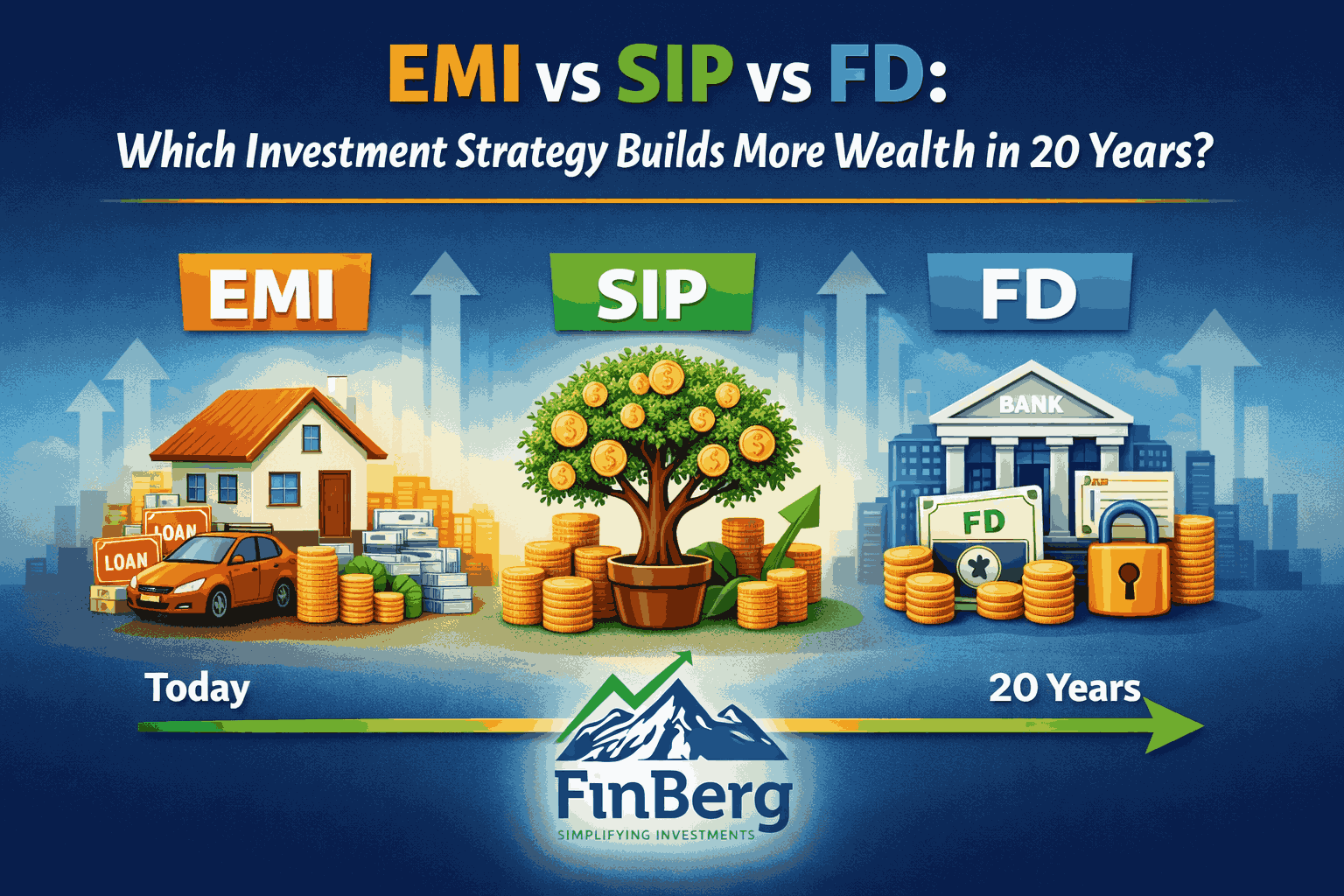
Managing money wisely is one of the most important skills for long term financial success. Many people often get confused between saving, investing, and managing liabilities.
The debate around sip vs fd and emi vs sip is very common among Indian investors who want to grow their wealth while also managing expenses like loans. Understanding how each option works can help you make smarter financial decisions.
When planning for long term goals like retirement, buying a house, or building wealth, it is important to compare sip vs fd returns and understand the role of EMI.
While SIP helps grow wealth, FD provides safety, and EMI helps acquire assets. This guide will help you clearly understand which strategy works best over a 20 year period.
Plan smarter investments with expert guidance today
Understanding EMI, SIP, and FD Basics
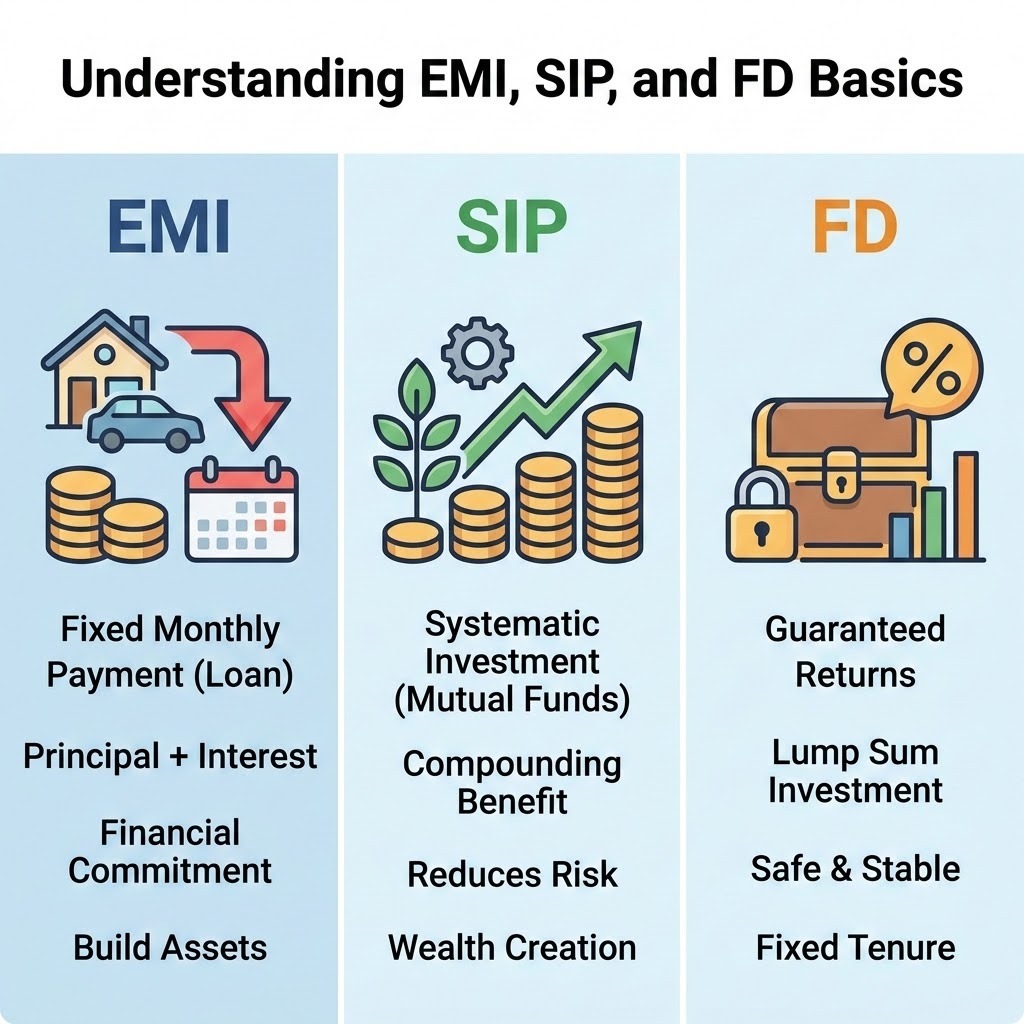
Before comparing these options, it is important to understand how each one works. EMI, SIP, and FD serve different purposes in financial planning, and knowing their basics will help you make better decisions.
What is EMI
• EMI is a fixed monthly payment made towards a loan such as a home loan, car loan, or personal loan
• It consists of both principal and interest components spread over a fixed tenure
• EMI is not an investment but a financial commitment that reduces your monthly savings capacity
• However, it can help you build assets like property over time
What is SIP
• SIP is a systematic investment method where you invest a fixed amount regularly in mutual funds
• It allows you to benefit from compounding over long periods
• SIP reduces market risk through disciplined investing and rupee cost averaging
• It is one of the most popular methods in sip vs fd comparison for wealth creation
What is FD
• Fixed Deposit is a traditional investment option that offers guaranteed returns
• You invest a lump sum amount for a fixed period at a fixed interest rate
• FD is considered safe and suitable for conservative investors
• It plays a key role in sip vs fd discussions for stability
How a Mutual Fund Distributor Helps You Choose, Invest, and Stay Consistent Without the Guesswork
EMI vs SIP: Investment vs Liability
Understanding emi vs sip is essential because one is an expense and the other is an investment. Balancing both can help you achieve financial stability.
How EMI Impacts Wealth
• EMI reduces your monthly disposable income, leaving less money for investments
• It helps in asset creation such as owning a home, but does not generate liquid wealth
• Long term EMI commitments can limit your ability to invest regularly
• High EMI can affect financial flexibility during emergencies
How SIP Builds Wealth
• SIP creates wealth through consistent and disciplined investing
• Compounding helps your investment grow exponentially over time
• SIP allows flexibility in increasing or decreasing investment amount
• It is a powerful tool when comparing emi vs sip for long term financial growth
EMI vs SIP Key Difference
• EMI is a liability while SIP is an investment
• EMI builds physical assets slowly, SIP builds financial wealth
• emi vs sip comparison shows that investing alongside EMI is crucial
• Smart financial planning involves balancing both
Stock SIP vs Mutual Fund SIP: Complete Comparison for Indian Investors
SIP vs FD: Which Gives Better Returns
When comparing sip vs fd, returns are the most important factor. While both options are popular, their outcomes differ significantly over time.
Returns from SIP
• SIP investments in equity mutual funds can generate higher returns over long periods
• Average returns can range between 10 to 15 percent depending on market performance
• SIP benefits from compounding and rupee cost averaging
• sip vs fd returns comparison often favors SIP for wealth creation
Returns from FD
• FD provides fixed and predictable returns
• Interest rates usually range between 5 to 7 percent
• Returns are stable but lower compared to market linked investments
• FD is suitable for risk averse investors
sip vs fd returns Comparison
• SIP has higher growth potential over the long term
• FD offers safety but limited returns
• sip vs fd returns gap increases significantly over 20 years
• Inflation further reduces real returns of FD
Pre IPO Investing in India: How to Invest in Unlisted Shares Before They Go Public
20 Year Wealth Comparison: EMI vs SIP vs FD
To understand which strategy builds more wealth, let us consider a practical example.
Example Scenario
• Monthly investment amount of ₹10,000 for 20 years
• SIP average return assumed at 12 percent
• FD return assumed at 6 percent
• EMI considered as expense without direct investment return
Wealth Outcome
• SIP investment grows significantly due to compounding
• FD grows steadily but at a slower pace
• EMI does not generate direct wealth unless asset value increases
• sip vs fd returns clearly show SIP creates higher wealth
Key Insight
• Long term investing strongly favors SIP
• sip vs fd returns gap widens over time
• emi vs sip highlights importance of investing alongside loans
• Combining strategies can improve financial stability
Comparison Table: EMI vs SIP vs FD
Understanding differences becomes easier with a comparison.
This table simplifies sip vs fd and emi vs sip comparison.
Types of Mutual Funds in India 2026: Complete Guide for Investors
Benefits of SIP, FD, and EMI
Each option has its own advantages depending on financial goals.
Benefits of SIP
• High return potential over long term
• Power of compounding
• Flexible and disciplined investment
• Best option in sip vs fd comparison for growth
Benefits of FD
• Safe and secure investment
• Guaranteed returns
• Suitable for conservative investors
• Provides stability in portfolio
Benefits of EMI
• Helps in acquiring assets like home or vehicle
• Enables large purchases without upfront payment
• Structured repayment system
• Useful for long term asset building
Risks and Limitations
Understanding risks helps in better decision making.
SIP Risks
• Market fluctuations can impact returns
• Returns are not guaranteed
• Requires patience and long term commitment
FD Limitations
• Lower returns compared to inflation
• Real value of money decreases over time
• Limited wealth creation potential
EMI Risks
• Financial burden over long tenure
• High interest cost
• Reduces investment capacity
Why Mutual Funds Are Popular in India: Benefits, Risks and Long Term Potential
Which Strategy is Best for You
The right choice depends on your financial goals and risk appetite.
For Wealth Creation
• SIP is the best option for long term growth
• sip vs fd comparison clearly favors SIP
For Safety
• FD is suitable for low risk investors
• Ideal for short term goals and emergency funds
For Asset Building
• EMI is useful for acquiring assets like property
• emi vs sip decision depends on financial planning
Read More: Comparing the Best PMS Companies in India: Performance, Fees, and Services Explained
Common Mistakes to Avoid
Avoid these mistakes to improve your financial strategy.
• Ignoring SIP for long term wealth creation
• Investing only in FD and missing growth opportunities
• Taking high EMI without proper planning
• Not balancing emi vs sip strategy
• Lack of diversification in investments
Conclusion
When comparing sip vs fd and emi vs sip, it becomes clear that each option serves a different purpose. SIP is the best choice for long term wealth creation, FD provides safety, and EMI helps in asset building.
For a 20 year investment horizon, sip vs fd returns clearly show that SIP has the highest growth potential. However, a balanced strategy that includes SIP for growth, FD for safety, and controlled EMI for asset creation can help you achieve complete financial stability.
Contact us to build your long-term investment plan
FAQs on SIP vs FD and EMI vs SIP
1. What is sip vs fd?
It is a comparison between mutual fund investing and fixed deposit saving.
2. Which gives better returns SIP or FD?
SIP generally offers higher returns over long term.
3. Is SIP safe?
It involves market risk but offers good long term growth.
4. Is FD better than SIP?
FD is safer but gives lower returns.
5. What is emi vs sip?
It compares loan repayment with investment strategy.
6. Which is best for 20 years?
SIP is best for wealth creation over 20 years.
7. Can I do both SIP and FD?
Yes, it helps balance risk and returns.
8. How much should I invest in SIP?
Depends on your income and goals.
9. Is EMI good or bad?
It is useful for asset creation but should be managed carefully.
10. Which is best for beginners?
SIP is ideal for beginners with long term goals.
Powered by Froala Editor




_11zon.jpeg)