Active vs Passive Portfolio Management: Which Strategy Works Best
Investing is not about picking a few stocks and waiting to get your money back. These days people who invest need to have a plan to take care of their money.
This is where services that help manage your investments come in. Whether you are new to investing or you have been doing it for a time the way you invest can really affect how much money you have in the long run.
One thing that people often talk about when it comes to investing is whether to use an passive approach to managing your investments. These two ways of doing things are very different. Each has its own good points.
Some people like to be in charge of their investments so they can try to make money than the market. Other people like to take a laid back approach so their investments are stable and consistent. If you understand how these two ways of managing your investments work you can decide which one is best, for what you want to achieve with your money.
Choose the right strategy to grow your wealth smarter
What is Portfolio Management and Why It Matters
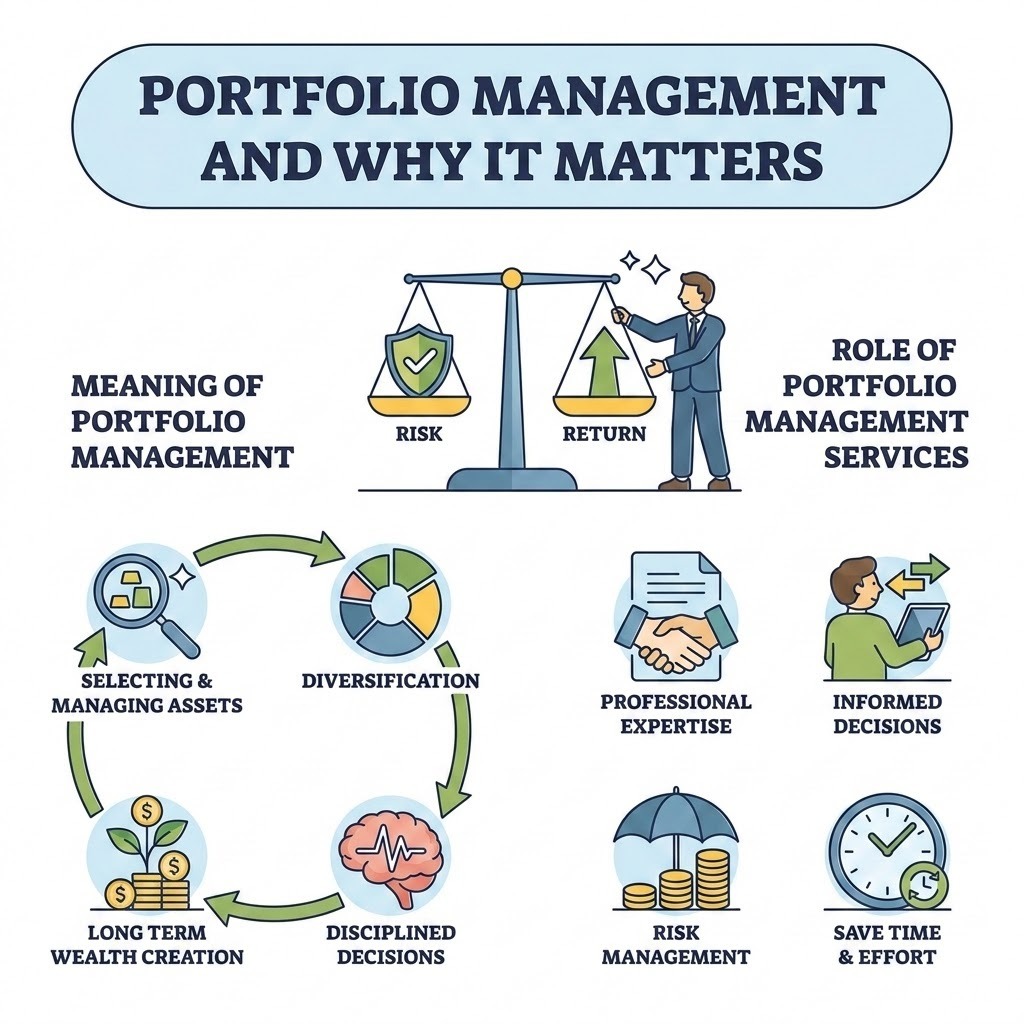
Portfolio management is the process of managing a mix of investments such as stocks, bonds, and funds. It focuses on balancing risk and return while aligning investments with financial goals. A well managed portfolio helps investors achieve steady growth and avoid unnecessary risks.
Meaning of Portfolio Management
• Portfolio management involves selecting and managing different assets to achieve financial objectives
• It focuses on diversification to reduce risk and improve returns
• Proper portfolio management strategies ensure long term wealth creation
• It helps investors stay disciplined and avoid emotional decisions
Role of Portfolio Management Services
• Portfolio management services provide professional expertise in managing investments
• They help investors make informed decisions based on market trends
• Ensure proper diversification and risk management
• Save time and effort for individuals who cannot actively track markets
EMI vs SIP vs FD: Which Investment Strategy Builds More Wealth in 20 Years
Understanding Active Portfolio Management
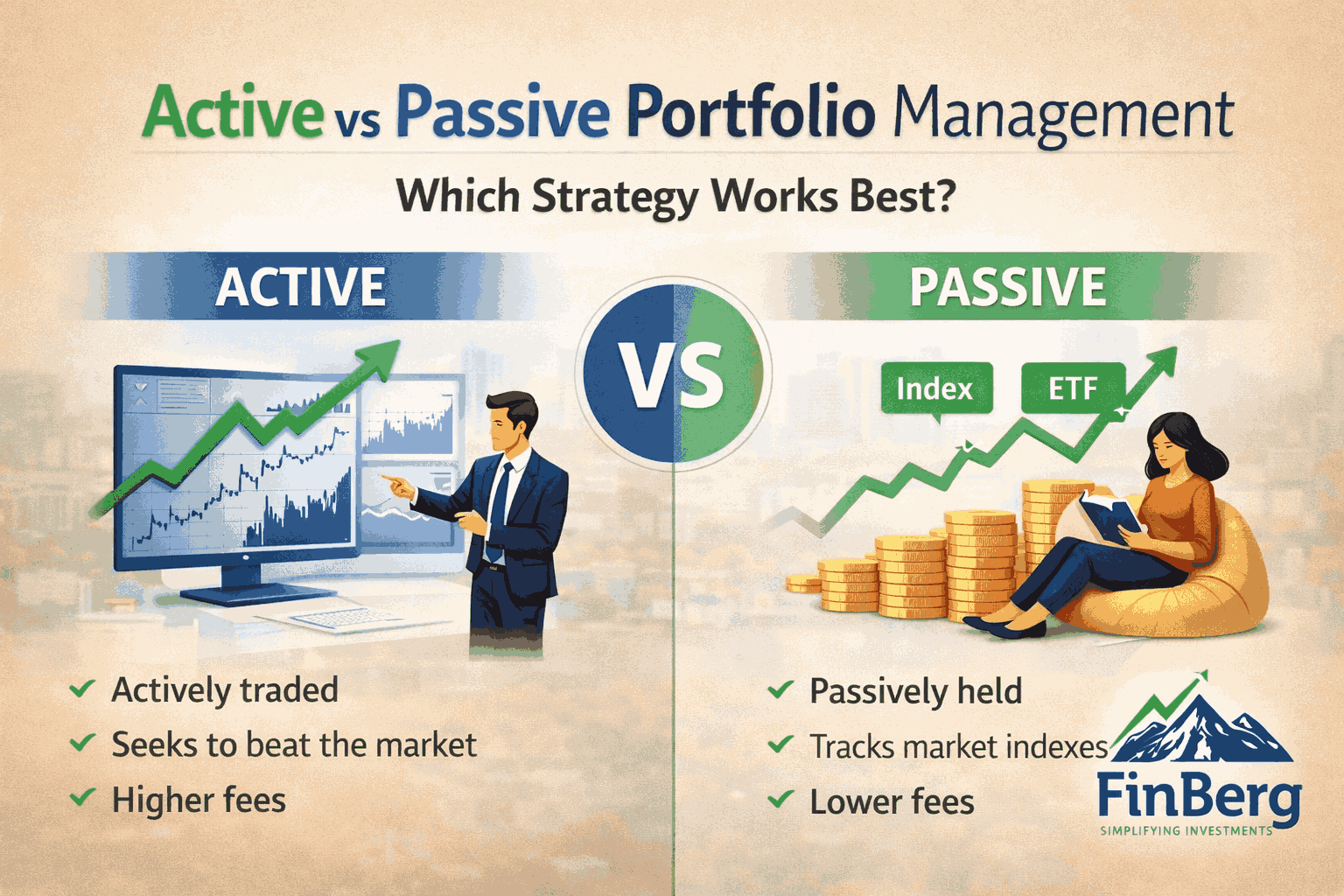
Active portfolio management is a hands on approach where investments are frequently monitored and adjusted. The goal is to outperform the market through strategic decisions.
What is Active Management
• Active portfolio management involves buying and selling assets regularly
• It focuses on market timing and identifying high performing investments
• Requires continuous research and monitoring
• Commonly used by professional portfolio management services
Key Features of Active Strategy
• Involves detailed market research and analysis
• Focuses on outperforming market benchmarks
• Requires expert knowledge and decision making
• Allows flexibility to adapt to changing market conditions
Read More: Comparing the Best PMS Companies in India: Performance, Fees, and Services Explained
Understanding Passive Portfolio Management
Passive portfolio management is a long term strategy that focuses on steady growth rather than frequent trading. It aims to match market performance instead of beating it.
What is Passive Management
• Passive portfolio management involves investing in index funds or similar instruments
• It tracks market indices like Nifty or Sensex
• Requires minimal buying and selling
• Focuses on long term stability and growth
Key Features of Passive Strategy
• Low cost investment approach with minimal fees
• Less active involvement and monitoring
• Stable and predictable returns over time
• Popular among investors looking for simple portfolio management strategies
How a Mutual Fund Distributor Helps You Choose, Invest, and Stay Consistent Without the Guesswork
Active vs Passive Portfolio Management: Key Differences
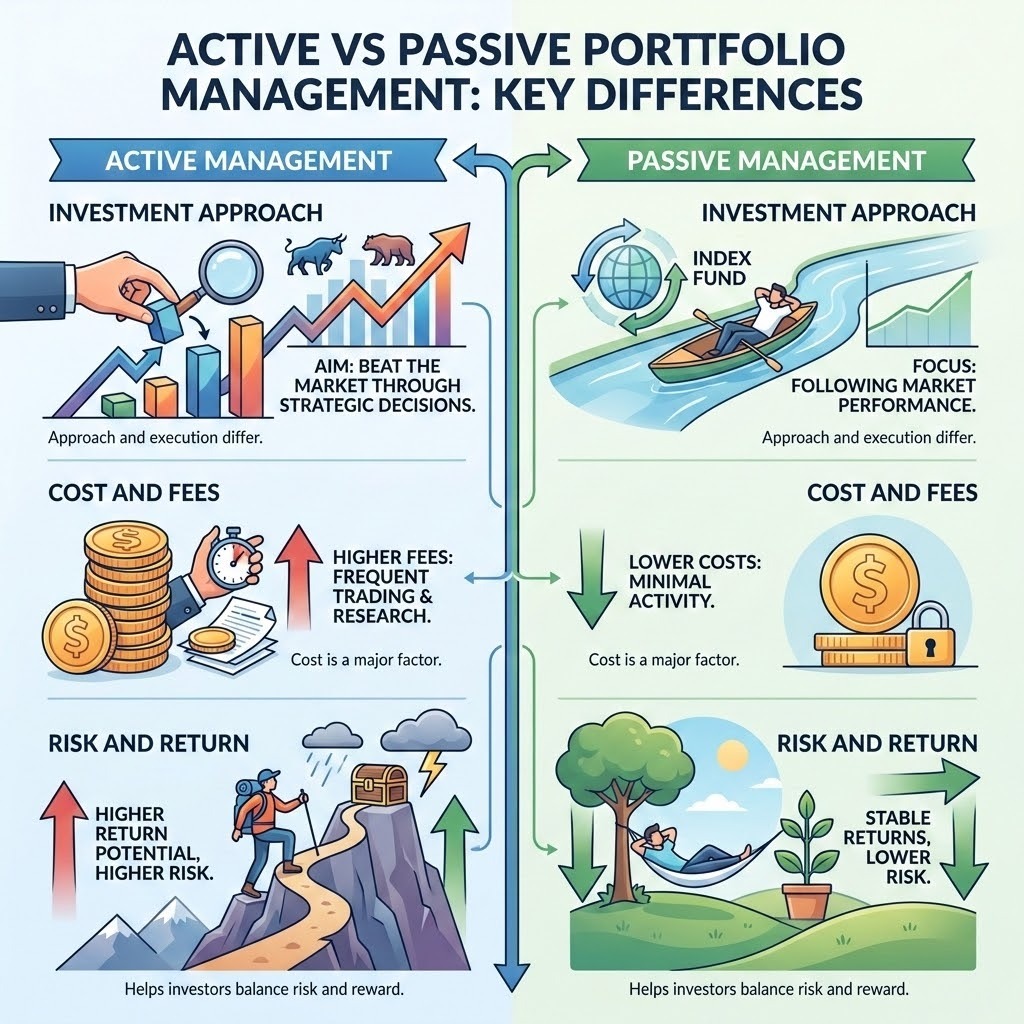
Understanding the differences between the two approaches is essential for making the right investment decision.
Investment Approach
• Active strategy aims to beat the market through strategic decisions
• Passive strategy focuses on following market performance
• active vs passive portfolio management differs in approach and execution
Cost and Fees
• Active management involves higher fees due to frequent trading and research
• Passive management has lower costs due to minimal activity
• Cost is a major factor in active vs passive portfolio management
Risk and Return
• Active strategy offers higher return potential but comes with higher risk
• Passive strategy provides stable returns with lower risk
• active vs passive portfolio management helps investors balance risk and reward
Comparison Table: Active vs Passive Portfolio Management
Choosing the right strategy becomes easier with a clear comparison.
This table simplifies active vs passive portfolio management for better understanding.
Stock SIP vs Mutual Fund SIP: Complete Comparison for Indian Investors
Benefits of Active and Passive Portfolio Management
Both strategies offer advantages depending on your investment style and goals.
Benefits of Active Strategy
• Potential to generate higher returns
• Flexibility to respond to market changes
• Opportunity to outperform benchmarks
• Suitable for experienced investors using portfolio management services
Benefits of Passive Strategy
• Lower cost and fees
• Simple and easy to manage
• Ideal for long term investing
• Suitable for beginners and conservative investors
Pre IPO Investing in India: How to Invest in Unlisted Shares Before They Go Public
Risks and Limitations
Understanding risks helps in making informed decisions.
Active Strategy Risks
• High cost due to frequent transactions
• Requires expertise and constant monitoring
• Returns are not guaranteed
• Can lead to losses if decisions are incorrect
Passive Strategy Limitations
• Limited potential to outperform market
• Returns depend entirely on market performance
• Less flexibility in changing strategy
• May not perform well in volatile markets
Types of Mutual Funds in India 2026: Complete Guide for Investors
Which Portfolio Management Strategy is Best for You
Choosing the right approach depends on your financial goals, experience, and risk tolerance.
For Beginners
• Passive strategy is simple and easy to understand
• Requires less time and effort
• Suitable for long term wealth creation
• Works well with basic portfolio management strategies
For Experienced Investors
• Active strategy offers more control and flexibility
• Suitable for those who understand market trends
• Can generate higher returns with proper knowledge
• Often supported by professional portfolio management services
Based on Financial Goals
• Choose passive strategy for stability and consistency
• Choose active strategy for higher growth potential
• Combining both can create a balanced portfolio
• Portfolio management strategies should align with your goals
Why Mutual Funds Are Popular in India: Benefits, Risks and Long Term Potential
Common Mistakes to Avoid
Avoiding mistakes is important for successful investing.
• Ignoring diversification and investing in limited assets
• Following market trends without proper research
• Not reviewing portfolio regularly
• Choosing the wrong strategy without understanding risks
• Not using professional portfolio management services when needed
Conclusion
Choosing between passive portfolio management really depends on what you want to achieve with your money how much risk you are willing to take and how much time you want to put in.A portfolio management service can help you pick the approach and keep your investments balanced.
By learning about portfolio management strategies you can make better choices and reach your long term financial goals.
Active portfolio management involves a lot of work and research to pick the stocks and bonds.They help you make a plan that fits your goals and risk appetite.With their help you can make decisions, about your investments.This way you can work towards achieving success.
Contact us to build the right investment strategy for you
FAQs on Active vs Passive Portfolio Management
1. What is active vs passive portfolio management?
It is a comparison between two investment strategies, one aiming to beat the market and the other tracking it.
2. Which is better active or passive?
It depends on your goals, risk tolerance, and experience.
3. Is passive strategy safe?
It is relatively safer due to diversification and lower risk.
4. Can active strategy beat the market?
Yes, but it requires expertise and involves higher risk.
5. What are the costs involved?
Active strategies have higher costs, while passive strategies are more affordable.
6. Who should choose passive strategy?
Beginners and long term investors.
7. Who should choose active strategy?
Experienced investors seeking higher returns.
8. Can I combine both strategies?
Yes, combining both can balance risk and return.
9. What is best for beginners?
Passive portfolio management is ideal.
10. What are portfolio management services?
They are professional services that help manage investments effectively.
Powered by Froala Editor